
The Middle East conflict has entered a new phase — one defined not just by escalation, but by expansion.
In the latest development, Yemen’s Houthi forces have officially launched missile and drone attacks on Israel, marking their first direct involvement in the war.
This is a structural shift.
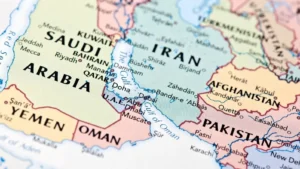
Until now, the conflict had largely revolved around direct exchanges between Israel and Iran, alongside limited involvement from allied groups. The Houthis’ entry changes that dynamic, opening a southern front that extends the war into the Red Sea region.
Why This Changes the War
The Houthis bring capabilities that extend beyond symbolic participation.
They have demonstrated:
- long-range missile strikes
- drone warfare precision
- ability to disrupt maritime routes
Their involvement transforms the conflict into a multi-front system, where events in one region influence outcomes in another.
This is not just escalation.
It is redistribution of conflict.
Red Sea and Global Trade Risk
One of the most immediate concerns is the Red Sea.
The Houthis have previously targeted shipping routes in this region, and their entry into the war raises the risk of renewed disruption.
The Bab al-Mandab Strait is critical for global trade.
Any instability here can:
- delay shipments
- increase shipping costs
- disrupt energy flows
This connects the conflict directly to the global economy.
Coordinated Regional Pressure
The Houthis are aligned with Iran and part of a broader regional network.
Their involvement suggests:
- coordinated pressure across multiple fronts
- increased operational complexity
- reduced predictability
This makes containment significantly more difficult.
Military and Political Implications
For Israel and its allies, a new front means:
- redistribution of defense resources
- increased operational strain
- broader strategic planning
For Iran, it represents an expansion of influence without direct escalation on every front.
What Happens Next
Three likely scenarios:
1. Limited Engagement: Occasional attacks without sustained escalation.
2. Sustained Multi-Front Pressure: Regular strikes across multiple regions.
3. Regional War Expansion: More actors join, increasing complexity.
The second scenario is already unfolding.
Conclusion
The Houthis’ entry marks a turning point. The conflict is no longer defined by a single axis.
It is becoming a regional system — and that makes it far more unpredictable.