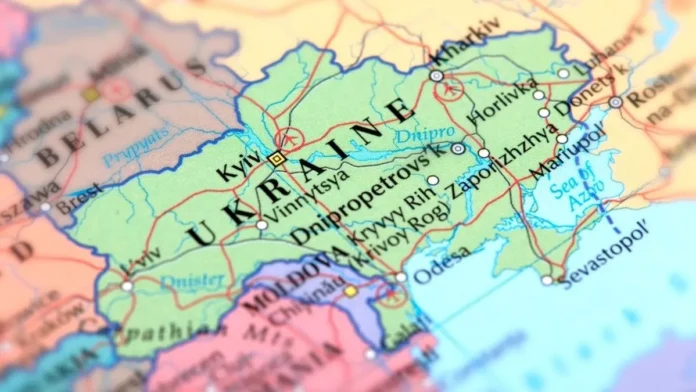

Ukrainian drones set an oil terminal in St. Petersburg ablaze on June 3, 2026, while President Vladimir Putin was hosting the St. Petersburg International Economic Forum in the same city — a precisely timed strike that sent black smoke billowing across Russia’s second city during its most internationally visible annual event, and illustrated the widening reach of Ukraine’s long-range drone campaign.
Ukrainian drones struck an oil terminal in St. Petersburg and set it ablaze, Ukrainian President Volodymyr Zelenskyy said, as the city hosted an annual economic forum promoted by President Putin.
Black smoke billowed over St. Petersburg after a Ukrainian drone strike sparked a fire at an oil terminal, according to Ukrainian and Russian officials. The attack came days before President Vladimir Putin is due to attend a major economic forum in the city.
The images that circulated from St. Petersburg on Wednesday afternoon were striking in their symbolism: a column of dense black smoke rising from the city’s port area, visible across a skyline also occupied by the domes and spires of Russia’s imperial capital, while inside the convention halls of the Expoforum centre, Putin and his ministers were presenting Russia as a country of economic dynamism and confident global engagement.
The oil terminal fire burned for hours. The economic forum continued. But the optics were impossible to manage.
What the Strike Hit and How It Was Done
The target was an oil terminal in St. Petersburg’s port area — a piece of energy infrastructure that sits within the city boundaries of Russia’s second-largest city and cultural capital. Striking it required Ukrainian drones to travel hundreds of kilometres from Ukrainian-controlled territory, evade Russian air defences along the way, and reach a specific target in a densely populated urban area.
That the strike succeeded — and that Russian air defences did not intercept the drones before they reached an oil terminal in the country’s second city — is itself a demonstration of the capabilities Ukraine has developed in its long-range drone programme over four years of war.
Ukraine has conducted extensive drone strikes on Russian territory since the beginning of the full-scale invasion in February 2022. The targets have progressively expanded in range and ambition: oil refineries in the Krasnodar region, energy infrastructure in central Russia, military logistics facilities, and now critical infrastructure in St. Petersburg. Each strike demonstrates that the Russian military’s ability to defend its own territory from Ukrainian attack has significant limitations.
Zelenskyy confirmed the strike publicly — an unusual level of acknowledgment for a Ukrainian leader who often attributes strikes to ambiguous sources. The public confirmation reflects the strike’s political purpose: it was not merely an infrastructure attack but a visible, documented message.
The St. Petersburg International Economic Forum — and What It Represents for Putin
The St. Petersburg International Economic Forum — SPIEF — is Russia’s most high-profile annual economic event. Inaugurated in 1997 and running annually since, it is Putin’s attempt to demonstrate that Russia remains an attractive destination for international business and investment despite the war and the sweeping Western sanctions that followed the 2022 invasion.
In the years since the invasion, SPIEF’s international attendance has changed dramatically. Western business leaders and government officials who once filled the forum’s sessions have largely withdrawn — some through their own decision, others under government pressure from their home countries. The forum has continued, reorienting toward participants from China, India, the Global South, and countries that have not joined Western sanctions.
Putin uses SPIEF to announce economic initiatives, host bilateral meetings with leaders from non-sanctioning countries, and project the image of a Russia that is functioning normally despite the costs of the war. The 2026 forum was designed to serve the same purpose — showcasing Russian economic resilience at a moment when the Iran war had created additional opportunities for Russian oil exports at elevated prices, and when Western unity on Ukraine appeared to be under greater strain than in previous years.
The Ukrainian drone strike on the oil terminal punctured that projection in the most visible way possible. No amount of messaging from a conference podium could compete with the column of black smoke that delegates could see from their hotel windows.
Ukraine’s Long-Range Strategy: What the Drones Are Meant to Achieve
Ukraine’s drone campaign against Russian territory serves multiple strategic purposes that go beyond the direct destruction of individual targets.
Economic pressure: Oil refineries, fuel depots, and energy terminals are significant economic assets. Their destruction reduces Russia’s capacity to process and export energy products — a key source of foreign currency revenue that funds the war.
Military logistics disruption: Fuel supply chains are essential to military operations. Strikes on fuel infrastructure in Russia proper force the military to rely on longer and more vulnerable supply routes.
Air defence saturation: The volume of Ukrainian drone strikes — conducted regularly against targets across a huge geographic area — forces Russia to maintain extensive air defence coverage over its own territory, diverting assets that might otherwise be available on the Ukrainian front.
Psychological and political effect: This is where the St. Petersburg strike’s timing matters most. A strike that coincides with the Russian leader’s most visible domestic event sends a message to Russian elites, to international audiences, and to the Russian public that the government cannot protect even the most symbolically important moments of national life.
Russia’s Response: Denial and Continuation
Russian officials acknowledged the oil terminal fire without confirming its cause publicly. Russian state media reported the fire as having been extinguished without providing details of casualties or the extent of infrastructure damage. The official line — that Russia’s air defences are functioning effectively — was complicated by the visible reality of burning infrastructure in a major Russian city.
Russia responded to Ukraine’s drone campaign with its own retaliatory strikes. The June 2 attack on Ukrainian cities — 73 missiles and 656 drones, killing 23 civilians including children — was partly framed by Russian military communications as a response to Ukrainian strikes on Russian territory. The symmetry of civilian infrastructure attacks on both sides is a defining feature of this phase of the war.
The War’s Four-Year Trajectory
The St. Petersburg oil terminal strike is a data point in a four-year trajectory that has consistently surprised analysts who underestimated Ukraine’s resilience, adaptability, and operational creativity.
In February 2022, most Western analysts assessed that Ukraine would be unable to resist a Russian military occupation for more than days or weeks. Four years later, Ukraine is striking oil terminals in St. Petersburg, maintaining a ground defensive line across thousands of kilometres, and conducting drone operations that reach into the heart of Russian economic infrastructure.
None of that changes the fundamental military reality: Russia is larger, has more resources, has more people to mobilise, and is receiving significant material support from Iran and North Korea. Ukraine’s survival and continued resistance have depended on Western support that has been sustained but at levels below what Kyiv has repeatedly requested. The air defence gap — exposed by the June 2 attack that killed 23 civilians — is a critical vulnerability.
But the St. Petersburg strike demonstrates something that is easy to lose sight of in the daily casualty figures and territorial maps: Ukraine has not lost the capacity to surprise, to reach beyond the expected, and to choose its moments with both military and political precision.
The smoke over St. Petersburg on the day of Putin’s economic forum was not incidental. It was a message. And it was received.
LoudFact.com is an independent global news and explainer platform. This report is based on reporting from NPR, Euronews, Al Jazeera, and AP as of June 3-4, 2026.