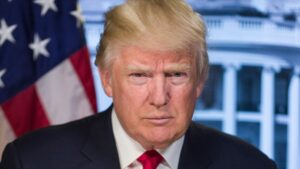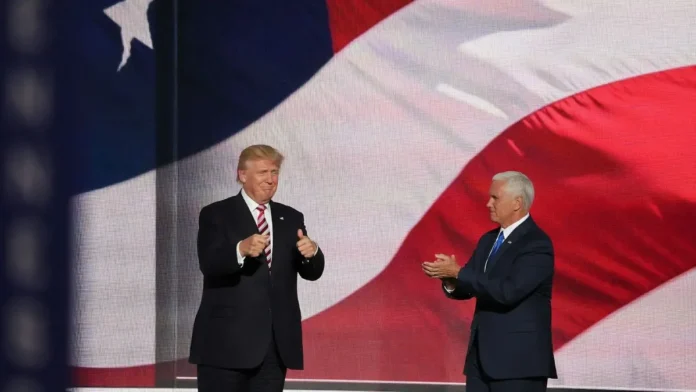

A new NPR poll released on June 18 shows President Trump’s approval rating at the lowest point of his second term — a political paradox in which the announcement of the Iran peace deal, the end of the Strait of Hormuz closure, and the beginning of oil price recovery have not translated into improved public standing, as the economic damage of 109 days of war continues to be felt by American households.
Trump signed a preliminary agreement with Iran yesterday to end the war and open the Strait of Hormuz. And, the president’s approval rating has hit a record low, according to a new NPR poll.
The juxtaposition encapsulated in that NPR headline is the defining political reality of the post-Iran-war moment for the Trump administration. The president ended a war. He opened a strait. He announced the deal on his 80th birthday, at the G7 in France, to a world that had been waiting 109 days for this news. And his approval rating went down.
To understand why, it is necessary to understand the economics of political pain and political relief — and the specific timing of the Iran war’s costs and their resolution.
How the Economics of the War Produced the Political Damage
The Iran war’s domestic political cost was not felt at the moment the war began. On February 28, when US and Israeli aircraft struck Iran, gas prices were $3.20 per gallon and inflation was 2.4%. The opening of the conflict was popular — or at least not unpopular. Americans rallied around a military action that was presented as eliminating a nuclear threat.
The cost accumulated gradually, and it accumulated in the most politically visible form possible: the gasoline station sign. By mid-May, national average gas prices had crossed $4.42 per gallon. By the week of the deal, they were above $4.56. US inflation had climbed from 2.4% to 4.2% — a 1.8 percentage point rise in three months that represented the fastest sustained inflation increase since the post-pandemic surge.
For the median American household, the Iran war was not an abstraction about nuclear programmes and Strait of Hormuz transit rights. It was $1.36 more per gallon at every fill-up, higher grocery bills, and the economic anxiety that comes with feeling that prices are moving in the wrong direction without end in sight.
Why the Deal Hasn’t Fixed the Numbers — Yet
The deal was announced on June 15. The NPR poll showing a record-low approval rating was released on June 18 — three days later.
The political economy of energy prices operates on a specific timeline. Oil futures fell 4.5% within hours of the deal announcement. Wholesale gasoline prices began falling within days. Retail pump prices — the number that appears on the signs that American voters see — follow the wholesale price with a lag of approximately two to four weeks.
On June 18, American drivers are not yet paying significantly less for gasoline than they were on June 14. The deal has been announced. The relief has not yet arrived at the pump. The poll captures the political reality of June 18, not the political reality of July 18.
This is the core of the political paradox: pain is immediate and visceral. Relief is delayed and gradual. Voters felt $4.56 per gallon for weeks before the deal was announced. They will not feel the full benefit of falling prices until weeks after it. The poll that registers record-low approval is a lagging indicator of the Iran war’s political damage — not an indicator of where the numbers will be when August’s gas prices are below $3.75.
The Congressional Dimension
The House of Representatives voted 215-208 to invoke the War Powers Act and end the Iran war on June 3 — twelve days before Trump announced the deal. Four Republicans — Thomas Massie of Kentucky, Brian Fitzpatrick of Pennsylvania, Andrew Garbarino of New York, and Warren Davidson of Ohio — crossed the aisle to vote with Democrats.
The 215-208 margin reflects a Congress that was responding to the same political pressures that the NPR poll measures: constituents experiencing $4.56 gas and 4.2% inflation, and expressing that experience as electoral pressure on their representatives. The vote did not produce legislation — it is a concurrent resolution that does not require the president’s signature — but it documented the political reality that the war was unpopular enough for a Republican-majority House to vote to end it.
Trump ended the war twelve days after the House voted to end it. He publicly argued at the G7 that he ended it to “avoid economic catastrophe” — an admission that is consistent with the political timeline. The House vote on June 3 was a political signal. The peace deal on June 15 was, in part, a response to it.
The Midterm Context
The November midterm elections are the proximate political event that makes the current approval rating numbers consequential. Democrats need a net gain of a small number of seats to reclaim the House of Representatives. Republican incumbents in competitive districts — many of whom represent suburban voters whose sensitivity to gas prices is well-established — are facing campaign environments shaped by months of $4+ gasoline.
Whether the deal’s economic benefits — oil prices falling, gas prices declining, inflation reversing — are fully felt by voters before November is the central political question. A poll taken in late October showing that gas is back below $3.75 and inflation is falling toward 3% would tell a different story than the poll taken on June 18.
Trump’s stated awareness of the economic dimension — his G7 admission that he ended the war to avoid catastrophe — suggests the administration understands the political timeline it is operating on. The question is whether the timeline is fast enough. September’s inflation data, released in mid-October, may be the most politically consequential number of the midterm cycle.
What the Record Low Actually Measures
A record-low approval rating three days after announcing the end of a war is a political paradox that requires precise interpretation. It does not mean that Americans want the war to continue. It means that the damage the war inflicted on the public’s economic experience has not yet been undone by the announcement of its conclusion.
It measures the cost that was accumulated across 109 days and has not yet been paid back. It will not be paid back on the day the deal is announced. It will be paid back — if the deal holds and oil prices continue to fall — in the July and August data that Americans will feel at the pump in the weeks ahead.
The question is whether three months of economic relief before November is sufficient to reverse three months of economic pain. History suggests that economic recovery is politically more rewarding than economic deterioration is punishing — that people remember the improvement more easily than the damage. But history also suggests that the recovery needs to be felt, not merely announced, to produce electoral benefit.
LoudFact.com is an independent global news and explainer platform. This report is based on the NPR poll released June 18, 2026, NPR reporting, Just Security’s Early Edition, and the documented political history of the Iran war as covered by LoudFact from February 28 through June 18, 2026.