
Seven days after Trump declared the Iran war over at the G7, this week put that declaration through its first genuine stress test — a near-collapse in Switzerland, a contradictory dispute over the Strait of Hormuz, and a Lebanon front that killed dozens even as both sides claimed to honour a ceasefire. The deal survived. This is the honest accounting of how, and at what cost, across one of the most consequential weeks of the post-war period.
A week ago, LoudFact closed its coverage of the Iran deal’s announcement with a note of appropriate caution: a historic diplomatic achievement, yes, but one whose durability would be determined “not by how it was received in the 48 hours after its announcement,” but by what followed. This week supplied the answer, in the most direct way possible — by nearly testing that durability to its breaking point, and then, through visible, hard-won diplomatic effort, pulling it back.
The Deal Nearly Broke — Then Didn’t
The week’s central drama played out at the Bürgenstock resort in Switzerland, where what began as a tense, almost adversarial encounter produced, by its conclusion, genuine structural progress. Talks between the US and Iran are under way in Switzerland, even as fissures emerge over President Donald Trump’s threats and Israel’s refusal to cease hostilities in Lebanon.
The early hours were genuinely alarming: Iranian sources report Tehran refused to enter the meeting until journalists left, rejecting what they called an American “media show.” Trump said he would “hit them (Iran) very hard again” if they don’t rein in their proxy Hezbollah.
And yet: The now-concluded talks between the US and Iran were conducted in a “positive and constructive atmosphere” and “encouraging progress” has been made, according to a joint statement from mediators Pakistan and Qatar. A new High Level Committee. Working groups on nuclear, sanctions, and Lebanon. A dedicated deconfliction mechanism for the front that has repeatedly threatened to derail everything else.
CNN’s own framing of this episode is the most useful lens for understanding it: The last time Trump’s interventions derailed talks was in April… Back then Pakistani mediators eventually managed to convince the Iranians to keep negotiating, and not for the first time they’ll be back at it again now. This is not a process that has proven itself uniquely fragile. It is a process that has proven itself, repeatedly, capable of surviving exactly the kind of volatility this week produced.
The Strait That Both Closed and Didn’t
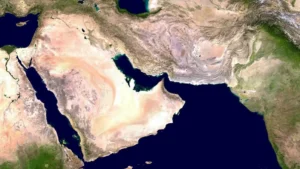
The week’s most genuinely confusing dispute — Iran’s military declaring Hormuz closed while CENTCOM insisted traffic had increased — resolved itself, by Sunday, in favour of the recovery narrative. Ship traffic through the Strait of Hormuz has returned to similar levels seen before the war with Iran broke out, U.S. Energy Secretary Chris Wright said Sunday… 67 ships traversed the vital waterway on Saturday, up from 55 ships the day before. Iran has resumed crude oil exports from its main export terminal after a roughly six-week pause.
That Iran’s own oil exports were quietly resuming through Kharg Island at the very moment its military was publicly declaring the strait closed is the clearest evidence available that Saturday’s closure announcement functioned as political signalling tied specifically to the Lebanon dispute, rather than as a genuine operational directive. The physical, economic reality and the political rhetoric were, for one weekend, simply two different things happening in parallel.
Lebanon Remains the Genuine Fault Line
Every other thread of this week’s reporting converges on the same underlying truth: Lebanon, not the nuclear file, not the strait, is where this deal’s durability will actually be decided. In a post on X, Araghchi said the newly established deconfliction mechanism in Lebanon would be the “first real test” of the agreement.
The human cost of that unresolved front was made vivid this week in the death of Mona Khalil — a 76-year-old conservationist who spent 27 years protecting sea turtles on a single Lebanese beach, who survived gunfire and arson attempts from local opponents over decades, and who ultimately died from wounds sustained when an Israeli airstrike hit her home. The Lebanese health ministry says more than 4,000 people have been killed since the war began on March 2, including at least 600 women and children. Her death — documented, mourned, attributed to a specific named individual whose life’s work is known — stands in for the vast majority of that toll that will never receive the same accounting.
The Rest of the World Did Not Pause
Consistent with the pattern LoudFact has documented across every week since the deal’s announcement, the world’s other major stories continued entirely on their own timelines. According to preliminary results from Sunday’s second round published by the national electoral authority, far-right candidate Abelardo de la Espriella is Colombia’s president-elect — by a margin of fewer than 250,000 votes, in an election whose outcome a Bogotá-based analyst summarised as “Colombians voted for two extremes, and whoever governs is going to have to find a midpoint that unites the country.”
That observation — about the impossibility of governing a country evenly split between two genuinely opposed visions — applies with equal force to the Iran deal’s own diplomatic challenge: the US and Iran are not negotiating from a position of mutual trust or shared vision. They are negotiating, week by week, mechanism by mechanism, a structure capable of managing genuine, persistent disagreement without that disagreement collapsing back into war.
What This Week Actually Demonstrates
The honest lesson of this seven-day period is neither triumphant nor despairing. It is this: genuine peace processes, between parties who fought an active war for 109 days, do not proceed smoothly. They proceed through exactly the kind of volatility this week produced — public threats, contradictory claims, near-collapses, and overnight casualty reports — interspersed with real, structural, hard-won progress that survives precisely because enough people on enough sides have a sufficient stake in making it survive.
One week in, the Iran deal has not failed. It has also not been easy. Both of those facts will likely remain true for every week of the 60-day follow-on period that remains — and quite possibly well beyond it.
LoudFact.com is an independent global news and explainer platform. This Day 28 analysis draws on the full body of LoudFact’s documented coverage from May 24 through June 21, 2026, and all primary sources cited throughout that coverage.