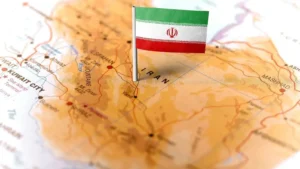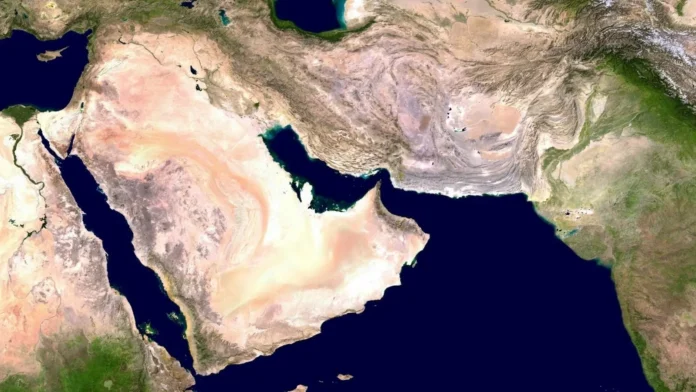

US officials reported on June 21 that shipping traffic through the Strait of Hormuz has returned to pre-war levels, with Energy Secretary Chris Wright citing 67 vessels transiting the waterway on Saturday and Trump claiming 19 million barrels of oil moved through it in a single day — even as Iran’s military had, just one day earlier, declared the strait closed again, and shipping companies continue to exercise caution given lingering security concerns.
Ship traffic through the Strait of Hormuz has returned to similar levels seen before the war with Iran broke out, U.S. Energy Secretary Chris Wright said Sunday. Wright made the remarks during an appearance on “Fox News Sunday,” saying 67 ships traversed the vital waterway on Saturday, up from 55 ships the day before. “In terms of oil and oil products, about equal to where we were before the conflict,” Wright said, adding that “traffic is flowing through the Straits quite nicely” thanks to the U.S. military presence in the region.
President Donald Trump told Fox News’ chief foreign correspondent Trey Yingst earlier Sunday that 19 million barrels of oil left through the Strait of Hormuz on Saturday.
These figures, delivered within hours of each other on the same Sunday, represent the most concrete, quantified evidence yet that the practical, physical reopening of Hormuz — distinct from the political and rhetorical disputes that have accompanied it — is genuinely underway.
A Striking Contrast With the Day Before
This recovery data arrived less than 24 hours after a starkly different set of headlines. Iran’s military declared Saturday that the Strait of Hormuz is closed due to Israeli attacks on Hezbollah in Lebanon. U.S. Central Command countered shortly afterward that commercial ship traffic in the strait actually increased Saturday.
Sunday’s officially cited figures — 67 ships transiting on the very Saturday that Iran claimed the strait was closed — appear to substantively validate CENTCOM’s same-day contradiction of Iran’s closure declaration. The physical evidence, as reported by the US government, points toward a strait that was operationally busier, not shut down, on the day Iran’s military made its public declaration.
Iran’s Own Exports Are Resuming
Iran has resumed crude oil exports from its main export terminal after a roughly six-week pause, according to a Bloomberg report published Saturday. The outlet reported that loading operations have restarted at Kharg Island, Iran’s primary oil export hub, as implementation of the agreement between Washington and Tehran gets underway. Iran has already moved about 20 million barrels of crude using tankers that remained in the region during the disruption, Bloomberg reported.
This detail is particularly significant in light of the Hormuz dispute, because Iran’s own commercial interest is directly tied to the strait’s continued operation. A government that genuinely intended to close the strait to all traffic would, by definition, also be cutting off its own primary mechanism for exporting crude oil — at precisely the moment its own foreign minister was publicly celebrating the waiver of oil and petrochemical export sanctions. The simultaneous fact of resumed Kharg Island loading operations and a public declaration of strait closure is difficult to reconcile as a coherent, unified Iranian government position — reinforcing the interpretation that Saturday’s closure announcement functioned primarily as political signalling around the Lebanon dispute, rather than as an operational directive that Iran’s own oil ministry was actually implementing.
The Caution That Remains
Some international shipping companies remain cautious about transiting the Strait of Hormuz because of security concerns, according to the report.
This is the crucial qualifier that keeps Sunday’s positive figures from representing a fully resolved situation. Shipping companies — and the insurance underwriters whose risk assessments determine the premiums that make voyages commercially viable — operate on the basis of accumulated trust built over weeks and months, not single days of favourable traffic data. A single weekend in which a major government declared the strait closed, even if that declaration did not translate into an actual operational blockage, is precisely the kind of event that sustains elevated risk premiums even as headline shipping volumes recover.
The gap between “traffic has returned to pre-war levels” and “shipping companies remain cautious” is not a contradiction. It reflects the reality that some operators — likely those with the highest risk tolerance, the most urgent cargo needs, or government-backed insurance arrangements — are already transiting at scale, while others continue to wait for a longer track record of stability before fully committing.
What This Means for Oil Prices Going Forward
The figures cited by Wright and Trump — 67 ships, 19 million barrels in a single day, traffic “about equal to where we were before the conflict” — are consistent with the trajectory LoudFact projected when the original MOU was first announced: that a credible, verified Hormuz reopening would produce a relatively rapid normalisation of physical shipping volumes, even as full market confidence (reflected in insurance premiums and the broadest possible base of shipping companies feeling comfortable transiting) would take longer to rebuild.
If this week’s Bürgenstock talks succeed in establishing the durable Lebanon “deconfliction mechanism” that Iran’s foreign minister described as the deal’s “first real test,” the remaining gap between physical recovery and full market confidence should continue to narrow. If Lebanon instead produces another collapse — another overnight casualty report, another Iranian closure declaration — that gap could widen again, regardless of how favourable any single day’s shipping data looks in isolation.
LoudFact.com is an independent global news and explainer platform. This report is based on reporting from Fox News, ABC News, and Bloomberg (via Fox News Digital) as of June 21, 2026.