
While every previous LoudFact article has covered the Pakistan-Oman-Russia diplomatic circuit, the most consequential external actor in the Iran war has consistently been the one saying the least: China. On Tuesday, that changed.
The Beijing Visit
As Iran’s Foreign Minister Abbas Araghchi visits Beijing, Rubio urged China to directly convey to him that continued hostility in the waterway will cause Tehran to be “globally isolated.”
Araghchi’s Beijing visit — coming immediately after his Islamabad-Oman-Moscow circuit — is the final leg of the most intensive Iranian diplomatic tour of the war. The sequencing is deliberate: Pakistan for mediation, Oman for the US back-channel, Russia for nuclear architecture, China for economic and political weight.
Each stop builds on the last. The Beijing meeting with Wang Yi is where Iran seeks China’s formal backing for whatever framework emerges from the back-channel negotiations.
Rubio’s Direct Ask to Beijing
Rubio’s public urging of China to convey a specific message to Araghchi — that continued Hormuz hostility means global isolation — is an unusual public diplomatic move. The US is not asking China to pressure Iran militarily, or to endorse Project Freedom, or to join the Hormuz clearance coalition. It is asking Beijing to carry a specific message in a face-to-face conversation that is already happening.
This is the US attempting to use China’s relationship with Iran as a diplomatic lever — without giving China anything in exchange. China’s response will reveal whether it is willing to use its Iranian leverage in service of US strategic objectives or whether it will protect its discounted oil supply and strategic partnership with Tehran.
China’s Leverage Over Iran
China imports approximately 30-35% of its daily oil from Iran through the shadow fleet — tankers operating outside normal AIS tracking, delivering Iranian crude despite US sanctions. At the current $108 Brent price versus the approximately $65-70 Iran receives through shadow fleet channels, Chinese refiners are saving approximately $40-45 per barrel on every Iranian barrel they process.
With approximately 1.5 million barrels per day of Iranian oil reaching China, that is a saving of approximately $60-67 million per day — or $2 billion per month — compared to market-price alternatives.
That economic relationship gives China more leverage over Iran than any other country. If Beijing told Tehran that shadow fleet purchases will be suspended unless Iran shows diplomatic flexibility, the economic pressure would dwarf anything the US blockade has produced. Iran cannot absorb the loss of Chinese oil demand on top of the US blockade simultaneously.
What China Wants From This War
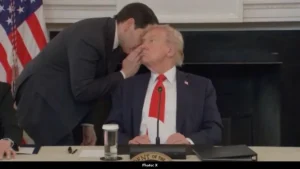
On Chinese social media, many users are already framing Beijing as the real “winner” of the Iran war. AI-generated videos circulating online mock President Donald Trump and portray the conflict as a strategic opportunity for China.
China’s ideal outcome remains unchanged: a negotiated settlement that reopens Hormuz (restoring normal global oil markets that China also participates in), prevents Iranian nuclear weapons (which would destabilise China’s energy supply region), and produces no US-dominated Gulf security architecture.
Wang Yi’s conversation with Araghchi on Tuesday will be shaped by that set of interests — and by whatever Beijing has been told about the status of the back-channel between Washington and Tehran.
Whether China uses this meeting to push Iran toward a deal, or to reassure Tehran of continued economic backing that reduces pressure to negotiate, will be the most consequential diplomatic variable of the next 72 hours.