
While the US and Iran trade escalatory naval orders and mine-laying operations in the Strait of Hormuz, something quieter is also happening inside Iran. The country is attempting, carefully and incompletely, to resume the rhythms of ordinary life.
The Flights
Iran Air resumed domestic flights Thursday after a 50-day suspension caused by the war. The semi-official news agency Fars reported that the first flight was scheduled to operate from Tehran to Mashhad — one of Iran’s busiest routes, widely used by both business travellers and religious pilgrims making the journey to one of Shia Islam’s holiest sites.
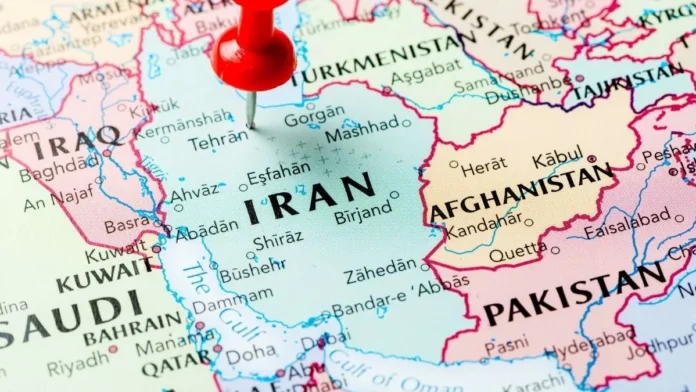
From April 25, airports in cities including Urmia, Kermanshah, Abadan, Shiraz, Kerman, Rasht, Yazd, Zahedan, Gorgan and Birjand are expected to resume operations. Additional airports are also scheduled to reopen over the weekend, further expanding connectivity within the country.
Fifty days without domestic flights is an enormous disruption for a country of 85 million people spread across a territory larger than Western Europe. Iran’s rail network was damaged by strikes; its highway system remained functional but slow. The resumption of air routes matters enormously for the millions of Iranians whose travel, commerce and family connections depend on the domestic aviation network.
International service is also returning — Varesh Airlines is resuming its Mashhad-Dushanbe-Mashhad route on April 24, the first international service to Tajikistan since the war began.
What Tehran Looks Like
AFP photographers documented Iranians gathering in coffee shops in northern Tehran as Middle East ceasefire uncertainty grows. The images showed ordinary scenes: groups of people, conversations, the small rituals of urban life that war disrupts and ceasefire partially restores.
Northern Tehran is the city’s most affluent district — a neighbourhood of tree-lined streets, cafes, and the kind of normalcy that the residents of southern Tehran, closer to the industrial and military zones that were targeted by US-Israeli strikes, may not yet be experiencing. But it is evidence that in parts of Iran, the ceasefire has created enough stability for daily life to partially resume.
Iran’s forensics chief said nearly 3,400 people had been killed in the country since US-Israeli strikes began February 28. More than 2,200 people have been killed in Lebanon, 32 have died in Gulf states, and 23 in Israel. Thirteen US service members have been killed.
The Contradiction Every Iranian Lives With
The resumption of flights and the reopening of coffee shops exist in direct tension with the wider picture: Iran’s oil wells are days from forced shutdown due to the blockade. Its Kharg Island storage is nearly full. Its IRGC is laying new mines in Hormuz.
Its parliament is reviewing a plan to formally claim sovereign control over the strait. And the US Navy now has orders to shoot any boat engaged in exactly what the IRGC is doing.
Iran’s airspace remains closed to international commercial flights. Imam Khomeini International Airport in Tehran is effectively shut down, with total closure for civilian operations over the Tehran flight information region. Only state, medical, and emergency flights are permitted.
Tehran’s international airport — the country’s main gateway — remains closed. International airlines continue routing around Iranian airspace, adding hours and cost to Europe-Asia routes. The domestic network is reopening; the international gateway is not. The ceasefire has restored some things while leaving the most economically significant disruptions entirely intact.
This is what ordinary Iranians are living through: flights to Mashhad, coffee in northern Tehran, and the knowledge that the same military and diplomatic forces that produced 50 days of war are still in motion — and that the next 72 hours will determine whether the thin membrane of the ceasefire holds or breaks.