
Japan is one of the countries most affected by the Iran war as the Asian nation relies on the Middle East for about 75% of its oil imports. Bessent’s visit comes at a time when relations between Beijing and Tokyo have frayed.
Vice Premier He Lifeng will lead a delegation to South Korea from Tuesday to Wednesday for trade talks with the US, according to China’s Commerce Ministry.
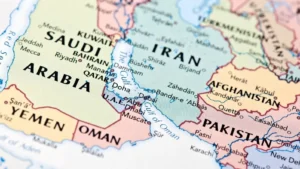
The Trump-Xi summit’s Iran dimension is being watched most anxiously not from the Atlantic but from the Pacific — by countries whose energy security is most directly exposed to the closure of a strait that sits 5,000 miles from Washington and 3,000 miles from Beijing, but much closer to the supply chains of the world’s most dynamic economic region.
Japan’s Exposure
Japan has almost no domestic oil production. Its economy — the world’s third-largest — depends on energy imports for everything from petrochemicals to transportation fuel. Three-quarters of that imported oil comes from the Middle East, and the majority of those Middle Eastern imports transited the Strait of Hormuz before February 28.
Since the war began, Japan has released strategic petroleum reserves, deployed coast guard vessels to the region, and absorbed massive increases in energy import costs that are flowing through to Japanese manufacturers and consumers. Inflation in Japan — which had been on an upward trajectory before the war — has been pushed higher by energy costs in ways that complicate the Bank of Japan’s monetary policy in exactly the worst moment.
Bessent’s visit comes at a time when relations between Beijing and Tokyo have frayed, following Takaichi’s comments in November that indicated Tokyo would support Taiwan if threatened by Beijing’s military.
Bessent in Tokyo simultaneously with Trump in Beijing is coordinated diplomacy: the US Treasury Secretary reassuring Japan that Washington’s Iran strategy has Tokyo’s interests in mind, while Trump negotiates the specific terms of Chinese Iran pressure with Xi.
South Korea, India and the Wider Region
South Korea is similarly exposed — it gets a large share of its oil from the Gulf and its electronics and automotive manufacturing supply chains depend on stable global energy costs. The Samsung and TSMC supply chains that produce the chips in every device connect energy costs to technology costs in ways that ultimately affect every consumer globally.
India launched Operation Urja Suraksha — a naval escort programme for Indian-flagged vessels — and has been subsidising domestic fuel prices at a cost of billions per month. India’s population of 1.4 billion includes hundreds of millions of households for whom fuel price increases represent a genuine hardship. Prime Minister Modi has been watching the Trump-Xi summit agenda with specific attention to whether a Hormuz reopening framework emerges.
“The most pressing agenda Item is the Iran-Hormuz crisis,” Nomura’s Chief China Economist Ting Lu said in a note Monday.
From Tokyo to Seoul to Mumbai, the Nomura assessment is shared: what Trump and Xi decide about Iran in the next 48 hours in Beijing matters more to the Asia-Pacific than any trade tariff, technology restriction or Taiwan statement that also emerges from the Temple of Heaven talks.