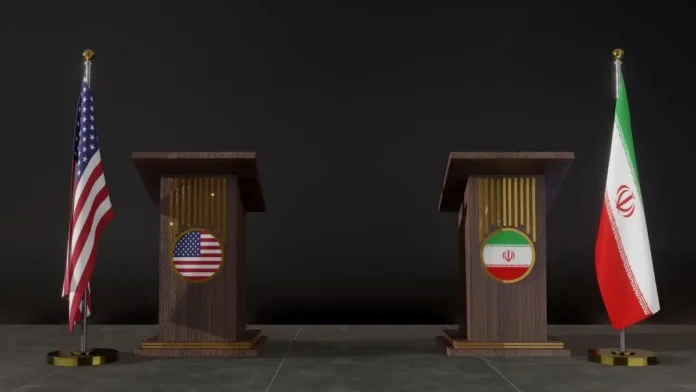

The United States and Iran agreed to halt military strikes on Friday, July 10 — the second such agreement in three weeks — as Qatari mediators flew to Tehran and US envoys prepared to travel to Doha for talks focused on the single question that has undone every previous diplomatic framework: who controls the Strait of Hormuz.
The pattern that has now repeated twice — escalation, pause, agreement to talk, resumed escalation — reflects a conflict in which neither side has the political will to sustain full-scale war indefinitely, but neither has found the terms that would allow a lasting de-escalation. Friday’s pause is the most recent iteration of that cycle.
What Was Agreed and Who Agreed It
The US and Iran agreed to stop attacking each other, according to a senior US official, as the two sides plan to hold talks this week in Qatar’s capital to work out their dispute over the Strait of Hormuz.
“We decided to stop all the kinetic activity,” a senior US official said. The agreement was reached through intermediaries — primarily Qatar and Pakistan — rather than through direct communication between Washington and Tehran.
Qatari negotiators have traveled to Iran to meet officials there in an effort to de-escalate the situation, a diplomat with knowledge of the visit told CNN on Friday. The trip was planned in coordination with the United States.
Iran’s President Masoud Pezeshkian also held a phone call with Pakistan’s Prime Minister Shehbaz Sharif. The call — the most direct high-level communication between Iran and a key mediator since the renewed fighting began on July 8 — was described by Pakistani officials as constructive, with both sides acknowledging the importance of continued dialogue.
Trump confirmed the pause in his own terms on Friday. “The Islamic Republic of Iran has asked us to continue ‘talks.’ We have agreed to do so,” Trump wrote in a Truth Social post. “But the United States has stated to them, in no uncertain terms, that the Cease Fire is OVER!” The combination of agreeing to talks while simultaneously declaring the ceasefire over reflects the fundamental ambiguity of Washington’s position: willing to negotiate, unwilling to restore the formal framework that gave the negotiations their diplomatic structure.
What the Doha Talks Will Actually Address
Trump’s envoys Steve Witkoff and Jared Kushner will travel to Doha on Monday and meet on Tuesday with the emir of Qatar, the Qatari prime minister and other regional officials to discuss the Iran deal, a White House official and a regional source said.
It’s still unclear if Witkoff and Kushner will meet any Iranian officials. On Wednesday, the head of the US technical team, Nick Stewart, and his Iranian counterpart Kazem Gharibabadi will meet separately with the Qatari and Pakistani mediators.
The separation of the US and Iranian delegations — talking to each other only through Qatari and Pakistani intermediaries — reflects the depth of the trust deficit between the two sides. Direct talks, which briefly occurred in Switzerland in late June, have not resumed since the fighting restarted.
The Doha talks were originally set to happen in Switzerland to address Iran’s nuclear programme, a source with knowledge of the talks said. The escalation moved them to a different venue and refocused them on the Strait of Hormuz. This is the most consequential consequence of the ceasefire collapse: the nuclear agenda — which was always the most important long-term issue — has been pushed back again, replaced by the immediate tactical question of who can pass through the Hormuz and on whose terms.
The Hormuz Question That Keeps Starting the War
Senior US officials said Washington expects Tehran to issue a public statement in the coming days that the Strait of Hormuz is open and that commercial vessels attempting to transit the waterway won’t be attacked. Without safe passage assured in the strait, then the two sides will “never” move on to negotiations on nuclear weapons, a senior US official said.
“What you see, in some ways, is the power struggle within Iran playing out in real time,” a senior US official said on a call with reporters Friday. The characterisation — a power struggle within Iran — echoes what multiple analysts have been saying since the ceasefire was first signed: that the IRGC’s willingness to attack ships in the Strait of Hormuz may reflect not a strategic decision by the Iranian government as a whole, but a factional assertion by the IRGC that it retains control over the waterway regardless of what the diplomatic track produces.
The root of the dispute is Paragraph 5 of the MoU, which says Iran will make arrangements to restore shipping through the strategic waterway and then work with Oman to determine how to administer it in the future. But it also includes an Iranian pledge to ensure safe passage and remove military obstacles such as mines. Trump administration officials saw that clause as unlocking the strait, the main accomplishment of the president’s deal. Iran’s government — or at least the IRGC — has interpreted the same clause as preserving Iranian authority over the waterway.
The Assassination Plot — and What It Adds to the Complexity
Israel shared intelligence with the US that Tehran has devised a new plan to assassinate President Donald Trump, sources told CNN. Khamenei’s funeral featured calls for revenge against Trump. The intelligence assessment adds a further layer of complexity to the diplomatic process: negotiations conducted while one side is allegedly planning to kill the other’s president require a level of institutional insulation between the diplomatic and security tracks that is difficult to maintain under the best of circumstances.
Trump’s language about Iranian leaders — calling them “scum” and “sick people” at the NATO summit — reflects genuine personal animosity that makes the diplomatic channel simultaneously necessary and fragile. US negotiators are attempting to sustain a process that Trump has publicly declared over, with a counterpart government whose new supreme leader has not been seen in 131 days, whose IRGC appears to be acting semi-independently and whose nuclear facilities are apparently being repaired in defiance of a commitment made 23 days ago.
Whether the Pause Will Hold
The US military strategy has been to deliberately strike and then pause to avoid escalation and to let diplomacy work, a US official told CNN. This “strike and pause” doctrine — escalate militarily to extract diplomatic concessions, then pause to allow negotiators to consolidate the gains — has defined the US approach since April. It has produced two ceasefire agreements, both of which have subsequently broken down.
Whether the third iteration of this cycle produces a different outcome depends primarily on whether the Doha talks can resolve the Hormuz governance question in terms that both sides can accept and that the IRGC will actually implement. Every previous failure to resolve that question has produced the same result: resumed attacks on shipping, resumed US strikes, resumed diplomatic emergency, resumed talks. The question is not whether the cycle will repeat — it already has twice — but whether Doha can break it.