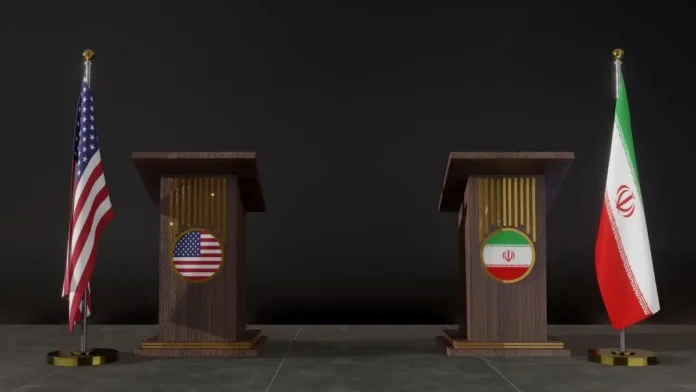

US and Iranian negotiators concluded a tense, high-stakes round of talks at the Bürgenstock resort in Switzerland on June 21-22, emerging with a joint roadmap toward a final 60-day agreement and a new mechanism to manage the volatile Lebanon front — even after a day that began with Iran’s delegation refusing to appear on camera, Trump threatening fresh strikes, and Iran’s military declaring the Strait of Hormuz closed again.
The U.S. and Iran made progress during talks in Switzerland on Monday toward reaching a final deal within 60 days, including the agreement to establish a committee and a mechanism to end hostilities in Lebanon. “The Lake Lucerne Summit was conducted in a positive and constructive atmosphere. Encouraging progress has been made, including the creation of a mechanism for further technical talks,” according to a joint statement by mediating parties Qatar and Pakistan.
This outcome was not guaranteed. Talks between the US and Iran are under way in Switzerland, even as fissures emerge over President Donald Trump’s threats and Israel’s refusal to cease hostilities in Lebanon… “It is high drama in one of the world’s highest-stakes diplomatic exercises,” said Al Jazeera’s Osama Bin Javaid, reporting from the Swiss mountain resort of Burgenstock.
That phrase — “high drama” — is an accurate description of how this round of talks unfolded, in real time, before producing a result that exceeded what the day’s opening hours suggested was possible.
How the Day Began: Tension, Threats, and a Snub
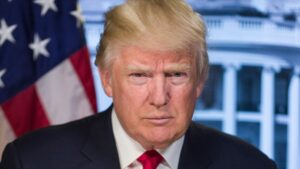
Trump said he would “hit them (Iran) very hard again” if they don’t rein in their proxy Hezbollah, whom he blames for escalating violence in Lebanon and threatened Vance’s Iranian counterparts they would never get home to their “f**king country” if they don’t open the Strait of Hormuz.
Araghchi briefly appeared in the same room with Vance before the cameras. But Iranian sources report Tehran refused to enter the meeting until journalists left, rejecting what they called an American “media show.” Iran is still denying Trump the photo-op he’s long sought.
The Iranian delegation did not speak during the opening remarks, nor appear in photos or footage alongside Vance, indicating “how tense things are.”
The combination of presidential threats delivered in characteristically blunt language and a deliberate Iranian snub of the cameras painted a picture, in the early hours of the summit, of a process closer to collapse than agreement. A senior US diplomat says Iran’s delegation remains at the negotiations venue in Switzerland, contradicting an Iranian state media report claiming that the team from Tehran had left the site in protest of US President Donald Trump’s repeated threats against the Islamic Republic.
Even the question of whether Iran’s delegation was still physically present at the venue was, for a period, genuinely contested between US and Iranian sources — itself a measure of how fragile the proceedings appeared to be in their early stages.
What the US Said It Was Actually Working On
The US diplomat says discussions have focused on “clarifying some of the confusing messaging from Iran on the Strait and building deconfliction mechanisms to ensure the strait will remain fully open.”
This framing is instructive. Rather than treating Iran’s Saturday declaration that Hormuz was “closed again” as a fundamental act of bad faith requiring renewed military pressure, the US delegation’s working framing was that the messaging itself was “confusing” — leaving room to resolve the dispute through clarification and mechanism-building rather than escalation. That is itself a notable diplomatic choice, given how directly contradictory CENTCOM’s and Iran’s public statements over the strait’s status had been just one day earlier.
Earlier, Vance had projected optimism when he addressed reporters alongside Pakistani Prime Minister Shehbaz Sharif and Qatari Prime Minister and Foreign Minister Sheikh Mohammed bin Abdulrahman bin Jassim Al Thani. “The opening of the Strait of Hormuz, the ending of the Iranian nuclear programme – all of these things have been accomplished,” Vance said. “The question before us is now how much more can we accomplish together.” “Can we turn over a new leaf? Can we change relations in the Middle East?”
What Actually Got Agreed
The now-concluded talks between the US and Iran were conducted in a “positive and constructive atmosphere” and “encouraging progress” has been made, according to a joint statement from mediators Pakistan and Qatar. The US and Iran have agreed to establish a High Level Committee to provide “political oversight on the mediation,” the statement said. Chief negotiators will report regularly to the High Level Committee and lead working groups focused “on nuclear, sanctions, and a monitoring and dispute resolution group to ensure the effective implementation of the (memorandum of understanding), and on other matters,” the statement said.
The creation of a formal High Level Committee with dedicated working groups represents the kind of institutional architecture that complex, multi-month negotiations require to function — a structure that did not exist, in this form, prior to this round of talks.
Iran’s foreign minister said that sanctions on Iran’s oil had been waived and some of Iran’s assets frozen abroad had been released, in a post following the conclusion of talks in Switzerland. In the post on X, Abbas Araghchi also said that “a major reconstruction and development plan for Iran has been launched.”
Iranian Foreign Minister Abbas Araghchi said there was “major progress” in talks with the U.S. to end the war between Israel and Hezbollah in Lebanon. “Tireless Pakistani and Qatari mediation has delivered major progress to end Lebanon War. Oil and petrochem exports are waived, blockade lifted, some frozen assets released, and major reconstruction & development plan launched for Iran,” he wrote on X.
The Lebanon Deconfliction Mechanism
“1st real test: Lebanon deconfliction cell,” he added.
In a post on X, Araghchi said the newly established deconfliction mechanism in Lebanon would be the “first real test” of the agreement, underscoring concerns that continued violence there could threaten the broader diplomatic effort.
This is, in concrete operational terms, the single most consequential outcome of the Bürgenstock round for the immediate future of the conflict. Araghchi’s own characterisation of it as the agreement’s “first real test” is an unusually direct acknowledgement — from the Iranian side itself — that the broader nuclear and sanctions framework will mean little if the Lebanon front cannot be stabilised. Mohammad Mokhber, an adviser to Iran’s supreme leader, Ayatollah Mojtaba Khamenei, accused the US on X of failing to implement the first clause of its 14-point interim deal with Iran, which stipulates a cease[fire].
What the US Says It Wants Most
Vance also said negotiators were focused on securing Iran’s enriched uranium stockpile to make it “effectively impossible” for Tehran to rebuild its nuclear program. He added that the U.S. retained significant economic leverage if Iran failed to comply with the agreement.
“We’ve had robust discussions on all elements of the nuclear deal. We plan to continue working through each of these issues and using today’s work as a starting point for ongoing technical talks going forward,” the U.S. official said.
The specific framing — securing the existing enriched uranium stockpile, rather than merely capping future enrichment — represents the sharpest articulation yet of what the US considers its core technical objective in the follow-on talks. This is a different, and in some ways more concrete, formulation than the duration-of-moratorium debate that had previously dominated public reporting on the negotiations.
A Pattern That Has Played Out Before
The last time Trump’s interventions derailed talks was in April, when he said Iran would give its highly enriched uranium to the US and never build a nuclear bomb. Iran denied his claims, and slow talks lost momentum. Back then Pakistani mediators eventually managed to convince the Iranians to keep negotiating, and not for the first time they’ll be back at it again now.
CNN’s framing of this episode as a recurrence of a familiar pattern — Trump-driven friction, near-collapse, Pakistani mediation pulling the process back together — is a sober and important corrective to any temptation to read Sunday’s “high drama” as either a uniquely dangerous moment or a uniquely triumphant resolution. It is, instead, simply the latest cycle in a negotiating relationship that has repeatedly proven capable of surviving exactly this kind of volatility.
What Happens Next
Technical discussions are expected to continue at the Bürgenstock resort throughout the week as the parties work toward a final agreement within 60 days.
The week ahead will be the genuine test of whether the “positive and constructive atmosphere” described in Sunday’s joint statement can be sustained as negotiators move from establishing institutional architecture to resolving the substantive disputes — enrichment moratorium duration, dismantlement modalities, and above all, whether the new Lebanon deconfliction mechanism can actually prevent the kind of overnight casualty reports that characterised the days immediately preceding this round of talks.
LoudFact.com is an independent global news and explainer platform. This report is based on reporting from CNN, CNBC, Fox News, Al Jazeera, the Times of Israel, and ABC News as of June 21-22, 2026.