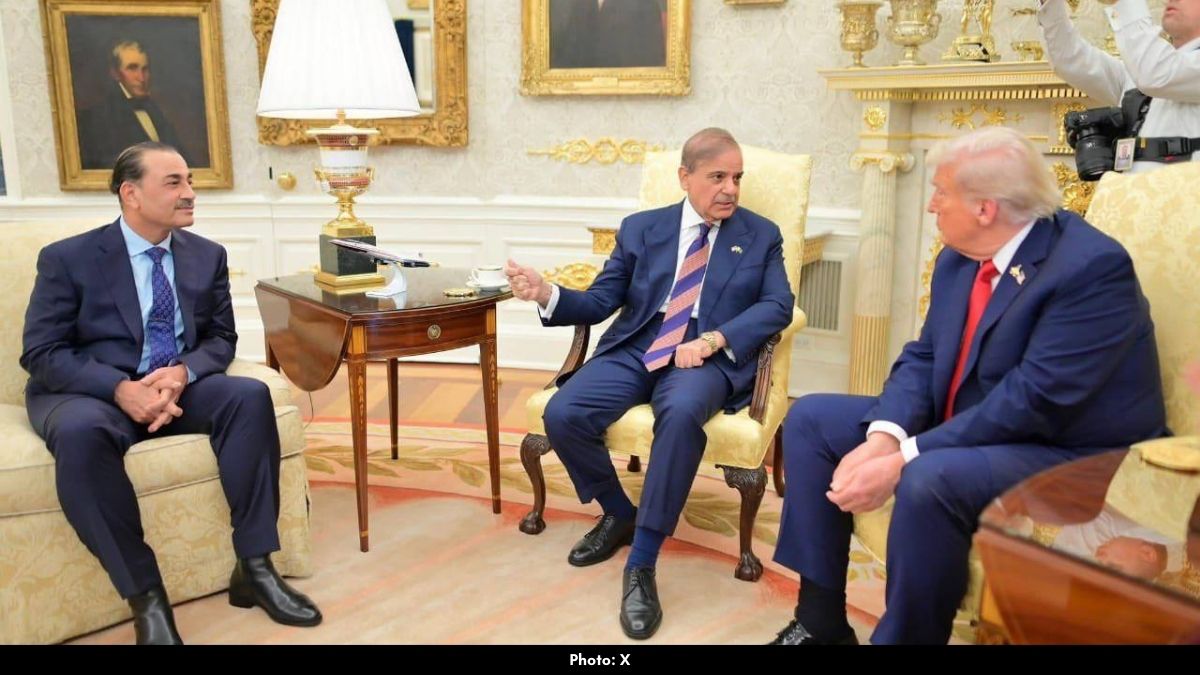
The most predictable unpredictable development of the Iran war has happened again. Trump set a hard deadline. He threatened overwhelming force. He said he was “raring to go.” And then, hours before the deadline, he backed down — while framing the retreat as strength.
This is the third time this exact sequence has occurred. Understanding why it keeps working tells you everything about the real balance of power in this conflict.
The Pattern, Laid Out
Round one — April 7: Trump threatened to end “a whole civilization.” Deadline 8 PM ET. Pakistan’s Munir intervened. Ceasefire announced at 6:32 PM — 88 minutes before the deadline.
Round two — April 12: Islamabad talks collapsed. Trump announced a naval blockade immediately after. No bombs dropped.
Round three — April 22: Trump said he was “raring to go,” “expected to be bombing,” declared extension “highly unlikely.” Pakistan requested an extension. Ceasefire extended indefinitely.
In each case, the sequence is: extreme rhetoric → Pakistan intervention → face-saving extension with blockade/pressure maintained.
Why Trump Keeps Taking the Off-Ramp
Trump is not ready to resume the war. One key concern of the administration is that US officials have suspected there was a significant divide between Iran’s negotiating team and the country’s military leaders in the IRGC, leading to questions about who can ultimately sign off on a deal.
An extension without an end date removes the pressure on Iran and could allow Tehran to drag out talks — something advisers have warned Trump about in private.
Trump’s dilemma is the same one every president faces when threatening a country that has demonstrated resilience: the threat only works if you are willing to carry it out, and carrying it out produces consequences you don’t want.
A massive resumed bombing campaign against Iran risks a direct confrontation in the Strait of Hormuz, Iranian missile strikes on Gulf states and US bases, and another spike in oil prices that would devastate Trump’s approval ratings before the midterms.
The blockade is a better pressure tool than bombs: it squeezes Iran economically without the military risks of renewed air strikes, and it can be lifted instantly as a concession when a deal is near.
What Iran’s Internal Split Means
Iran’s civilian leaders — including Ghalibaf and Foreign Minister Araghchi — favoured continuing talks. But IRGC commander Gen. Ahmad Vahidi and his deputies refused to offer concessions and opposed negotiations as long as the naval blockade continues.
This split is the single most important variable in whether a deal is achievable. If Iran’s supreme leader Mojtaba Khamenei — who inherited power after Ali Khamenei’s assassination — sides with the civilian team, a deal becomes possible. If he sides with the IRGC hardliners, it does not.
The open-ended extension Trump announced today is essentially a bet that Khamenei will eventually instruct his negotiators to produce a unified proposal. Whether that bet pays off depends entirely on what happens inside Tehran’s political system over the coming days.
The Risk of No Deadline
An extension without an end date removes the pressure on Iran and could allow Tehran to drag out talks — something advisers have warned Trump about in private talks, according to sources familiar with the discussions.
Removing the deadline also removes Trump’s most effective negotiating tool. The two-week ceasefire worked as a framework precisely because its expiry created urgency. An open-ended extension reduces that urgency — but the blockade, by continuing to cost Iran $500 million per day in lost oil revenue, maintains a different kind of pressure.
The pattern says the war will not resume tonight. But it also says this diplomatic holding pattern cannot last indefinitely. The question is how many more iterations of the same sequence — threat, Pakistan intervention, extension, back-channel pressure — remain available before one side blinks for real.