
If you’ve explored effective ways to lose weight, you’ve probably encountered the concept of a “calorie deficit diet.” While diet trends frequently come and go, the calorie deficit method has remained a scientifically validated and practical approach for achieving healthy, sustainable results.
But what is this diet, how does it operate, and how can you implement it safely? Here’s a comprehensive guide that includes everything you need to understand about calorie deficit diet, its advantages and disadvantages, and how to organize your daily meals for the best results.
What Is a Calorie Deficit Diet?
A calorie deficit diet involves a nutrition plan where you purposefully consume fewer calories than your body uses in a day. The difference between your calorie consumption and what your body burns encourages it to utilize stored fat for energy, leading to gradual weight loss.
For instance, if your daily calorie needs are 2000 calories, eating 1500 calories daily creates a 500-calorie deficit. Over time, this shortfall promotes consistent fat loss as the body draws on its reserves to fulfill your energy demands.
However, a calorie deficit goes beyond simply cutting calories – it focuses on making intelligent, nutrient-dense food selections while effectively managing your energy balance for sustainable weight management.
The Science Behind Calorie Deficit Diet
The core concept is straightforward: weight loss happens when you consume fewer calories than your body burns. This compels the body to utilize its fat and glycogen reserves for energy.
You can achieve a calorie deficit by either reducing your food intake, increasing your physical activity, or ideally, a combination of both. The optimal approach is to maintain a moderate deficit of approximately 300-500 calories each day, which usually results in a healthy and sustainable weight loss of about 1-2 pounds per week.
A smaller, steady deficit is deemed safer and more effective than severe restrictions, which can lead to muscle loss, nutrient shortages, or rebound weight gain.
Who Is a Calorie Deficit Diet For?

This method is perfect for individuals looking for slow, sustainable weight loss based on scientific principles. Nevertheless, a calorie deficit diet may not be appropriate for everyone. Individuals with eating disorders, pregnant or nursing women, and developing teenagers should avoid this strategy or seek medical advice before beginning. Always reach out to a registered dietitian for personalized guidance.
How to Start the Calorie Deficit Diet
Step 1: Calculate Your Maintenance Calories
The calories you need each day vary based on factors such as age, weight, height, gender, and level of physical activity. The Total Daily Energy Expenditure (TDEE) evaluates the number of calories you expend daily by considering your Basal Metabolic Rate (BMR) along with your activity level.
You can use different online calculators, but formulas exist:
For men:
BMR = 88.362 + (13.397 x weight in kg) + (4.799 x height in cm) – (5.677 x age in years)
For women:
BMR = 447.593 + (9.247 x weight in kg) + (3.098 x height in cm) – (4.330 x age in years)
Your TDEE is BMR multiplied by your activity factor (1.2-1.9, from sedentary to highly active).
Step 2: Set a Realistic Calorie Deficit
Strive to reduce your daily caloric intake by 300-500 calories from your maintenance level. This promotes gradual, steady progress and minimizes the chances of fatigue, cravings, or loss of muscle.
Step 3: Choose Nutrient-Dense Foods
Prioritize whole, unprocessed foods:
- Lean proteins (poultry, fish, tofu, legumes)
- Fresh fruits and vegetables
- Whole grains (brown rice, quinoa, oats)
- Healthy fats (avocados, nuts, olive oil)
- Low-fat dairy or fortified dairy alternatives
Step 4: Practice Portion Control
Use smaller plates, measure food, and be mindful of serving sizes to avoid accidental overeating.
Step 5: Keep Track of Your Intake
Use food diaries or calorie-tracking apps to monitor your consumption and ensure you’re sticking to your goals.
Step 6: Eat Smaller, More Frequent Meals
Some evidence shows that eating 4–6 smaller meals daily helps regulate appetite, prevents overeating, and maintains stable energy.
Step 7: Exercise Regularly
Include both strength training and cardio to preserve muscle mass, strengthen your heart, and increase your calorie burn.
Step 8: Seek Professional Guidance
Consult with a dietitian for a plan that suits your unique needs and health conditions.
What to Eat on a Calorie Deficit Diet
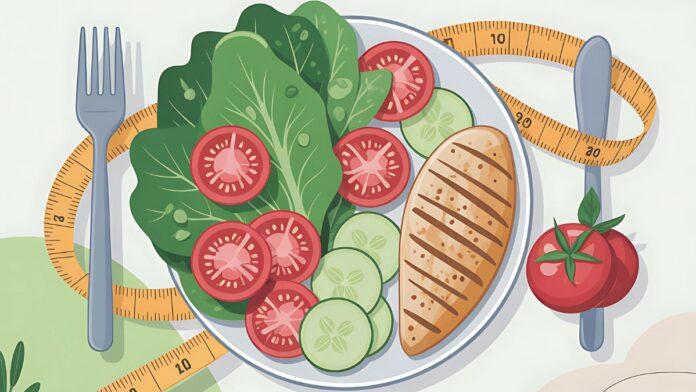
A well-balanced calorie deficit diet isn’t about deprivation. Here’s what your plate should look like:
- Proteins: Poultry, lean beef, fish, tofu, legumes.
- Fruits & Vegetables: All types, for fiber, vitamins, and satiety.
- Whole Grains: Quinoa, whole wheat bread, brown rice, oats.
- Healthy Fats: Avocado, nuts, seeds, olive oil (in moderation).
- Dairy & Alternatives: Low-fat yogurt, milk, or fortified plant-based milk.
- Smart Snacks: Greek yogurt, mixed nuts, fresh fruit, whole-grain crackers with hummus.
- Hydration: Water, herbal teas, and low-calorie beverages; avoid sugary drinks and alcohol.
Strategies to Reduce Excess Calories
- Mindful eating: Focus on hunger and fullness cues.
- Meal prepping: Control portions and nutrition by cooking at home.
- Snack wisely: Opt for fruits or a small handful of nuts.
- Limit Junk Foods: Limit processed foods, sugary snacks, and soft drinks.
- Stay hydrated: Sometimes thirst mimics hunger.
- Moderation: Allow the occasional treat in small amounts.
Calorie Deficit Diet Risks
While effective, a calorie deficit diet carries some risks if not followed properly:
- Nutrient Deficiencies: Without careful planning, you may lack essential vitamins (like C and zinc) or minerals, impacting immunity and energy.
- Muscle Loss: Insufficient protein or extreme deficits can erode muscle tissue.
- Fatigue & Weakness: Too few calories can leave you exhausted and impair exercise.
- Hormonal Imbalances: Prolonged dieting can affect hormones, leading to issues like reduced testosterone or altered thyroid function.
- Mental Health: Restrictive patterns may increase stress, anxiety, or risk of binge eating.
- Consultation: Always discuss new diets with a healthcare provider, especially if you have underlying health concerns.
7-Day Calorie Deficit Diet Plan
(Portion sizes should be tailored to your calculated calorie allowance.)

Conclusion
A calorie deficit diet is a proven strategy supported by science for gradual and sustainable weight loss. By focusing on whole foods, increasing protein intake, and practicing portion control, along with integrating regular exercise, you can reach your health objectives while still maintaining proper nutrition and your well-being. As with any dietary adjustment, it’s wise to consult a healthcare professional or dietitian to personalize the plan according to your specific needs and ensure safe, lasting outcomes.
FAQs
How do I handle hunger on a calorie deficit diet?
Stay hydrated, consume high-fiber foods, and spread meals throughout the day to manage cravings.
How long should I follow this diet?
Duration depends on your goal and health status. Consult a professional.
What if my calorie deficit is too extreme?
If you feel severe fatigue, constant hunger, or dizziness, increase your calories and speak to a dietitian.
Is this different from a crash diet?
Yes, a calorie deficit focuses on sustainable reductions vs. crash diets, which are extreme and unsustainable.