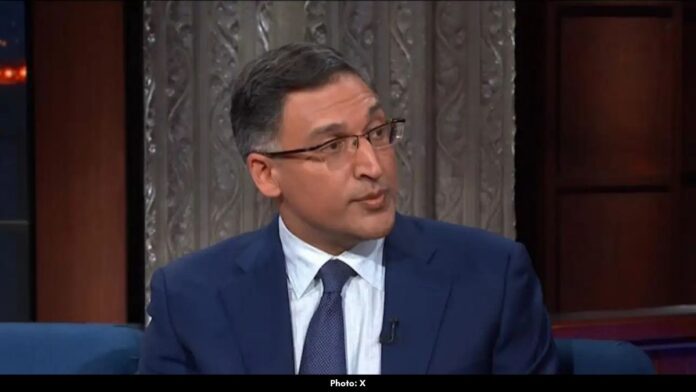

Indian-American attorney Neal Katyal appeared before the U.S. Supreme Court on Wednesday in a high-profile case that could redefine the limits of presidential power over trade and foreign policy.
The case, which former President Donald Trump has described as “one of the most significant in American history,” will decide how far a president can go in imposing tariffs without congressional approval.
At the heart of the dispute lies the 1977 International Emergency Economic Powers Act (IEEPA) — a law that grants presidents authority to act during national emergencies related to foreign affairs.
A ruling against Trump could restrict his ability to use tariffs as a diplomatic or economic tool, potentially reshaping future presidential powers.
Neal Katyal’s Argument: Restoring Balance to Presidential Power
Representing the petitioners, Neal Katyal, a renowned Supreme Court litigator and former Acting U.S. Solicitor General, argued that the law does not give presidents “unlimited authority to impose trade restrictions.”
He emphasized the need for checks and balances within U.S. governance, warning that unchecked executive power could undermine constitutional principles.
Katyal’s appearance in the case underscores his long-standing role as a leading constitutional advocate who has often challenged executive overreach — including previous confrontations with Trump-era policies.
Who Is Neal Katyal?
Neal Katyal is among the most accomplished constitutional lawyers in the United States, having argued over 50 cases before the Supreme Court — more than any minority attorney in U.S. history.
The 55-year-old attorney broke the record previously held by civil rights icon Thurgood Marshall.
Katyal first rose to prominence as co-counsel for former Vice President Al Gore during the Bush v. Gore case in 2000, a pivotal moment in American legal and political history.
Career Highlights and Major Court Victories
During the Obama administration, Katyal served as Principal Deputy Solicitor General and later as Acting Solicitor General, representing the federal government in appellate matters before the Supreme Court and Court of Appeals.
Some of his most notable Supreme Court victories include:
- Defending the Voting Rights Act of 1965’s constitutionality.
- Successfully representing former Attorney General John Ashcroft against claims of abuse during the War on Terror.
- Winning a landmark environmental case against eight states that sued major power plants for contributing to global warming.
These accomplishments have earned Katyal widespread recognition within the legal community, including being named “Litigator of the Year” by American Lawyer Magazine in both 2017 and 2023.
Taking on Trump: From the Travel Ban to the Tariff Case
Katyal has frequently faced off against Donald Trump in court. In 2017, he filed a legal challenge against Trump’s controversial travel ban, known as the “Muslim Ban.”
Working with a federal judge in Hawaii, Katyal successfully halted critical elements of the policy. His persistent challenges to Trump’s policies earned him the nickname “Trump Tormentor.”
In 2019, he authored the book “Impeach: The Case Against Donald Trump,” which outlined constitutional arguments for accountability and the limits of presidential power.
Personal Life and Background
Born in Chicago to Indian immigrant parents — an engineer father and a physician mother — Neal Katyal’s academic and professional journey reflects both intellectual rigor and cultural influence.
He earned his law degree from Yale Law School, where he was mentored by renowned constitutional scholar Akhil Amar.
Today, Katyal is a partner at Milbank LLP, where he collaborates with the Liberty Justice Center, a libertarian law firm specializing in constitutional cases.
Why Neal Katyal’s Case Matters
The outcome of the Supreme Court tariff case could reshape how presidents wield emergency economic powers — defining the balance between the executive branch and Congress for decades to come.
For Katyal, it’s not just another case — it’s part of his lifelong mission to uphold constitutional balance and protect democratic principles.


