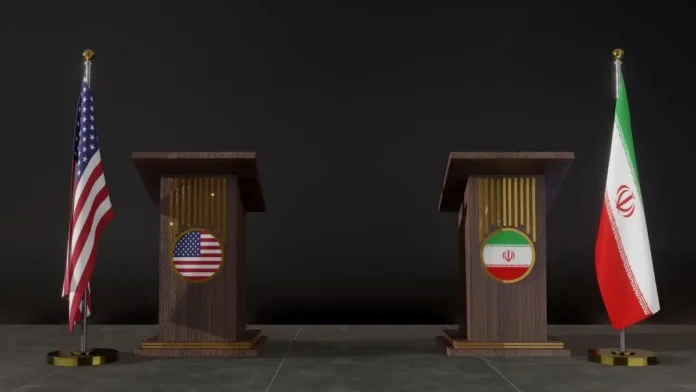

The war between the United States and Iran reached its 201st day this week with 18 American service members killed and more than 800 wounded since February, as a densely packed diplomatic calendar over the coming two weeks offers multiple potential turning points but no clear path toward resolution.
What Happened
According to campaign tracking compiled by GlobalSecurity.org, the US casualty figure stands at 18 killed and over 800 wounded since fighting began February 28, with the wounded total exceeding the Defense Casualty Analysis System’s official count of 794. The Defense Department classifies four service members killed between July 17 and 19 in Jordan and Iraq under “Overseas Operations Casualties,” a categorization that has contributed to discrepancies between different official and independent casualty counts.
A UN Security Council vote on reestablishing the 1737 Committee panel, the body historically responsible for monitoring Iran sanctions compliance, is scheduled for Thursday, September 17, with Russia and China both on record stating the Council “cannot proceed to reestablish” it, setting up a likely confrontation among permanent members. The diplomatic calendar’s other fixed points include Chinese President Xi’s visit on September 24, the UN General Assembly opening on September 22 with Iranian opposition rallies called for September 22 and 23, a Rome round of Lebanon talks in October, and a Gulf-Iran meeting in Oman described only as coming “in the near future” on Russian Foreign Minister Sergei Lavrov’s word.
Separately, Lebanon is pressing Council members for a “UNIFIL-like force” to replace the peacekeeping mission whose mandate expires at year’s end, a request the United States opposes extending while France seeks a temporary extension, adding another unresolved regional dispute to the Council’s agenda.
Why It Matters
The casualty figures, particularly the more than 800 wounded, represent a substantial human cost that has received considerably less public attention than the conflict’s economic effects, even as those numbers have become a focal point for congressional critics questioning the war’s continuation without authorization.
The Security Council vote on the 1737 Committee carries significant implications for the international sanctions architecture surrounding Iran, with Russian and Chinese opposition suggesting the vote may fail or be blocked, potentially limiting the multilateral enforcement mechanisms available to Washington beyond its own unilateral sanctions campaign.
The fact that the Gulf-Iran meeting in Oman remains scheduled only “in the near future” on Lavrov’s word, with no confirmed date after its postponement earlier this week, illustrates how thin the concrete diplomatic pipeline actually is despite the busy calendar of scheduled international gatherings.
Context and Background
The war began February 28 with coordinated US-Israeli strikes that killed Iran’s Supreme Leader Ali Khamenei and dozens of senior officials, and has since expanded to involve Iranian strikes on Saudi Arabia, the UAE, Kuwait, Bahrain, Jordan, and Qatar, alongside the separate collapse of Yemen’s ceasefire and the Houthi takeover of the Bab al-Mandab strait.
The 1737 Committee was originally established under UN Security Council Resolution 1737 in 2006 to oversee implementation of sanctions related to Iran’s nuclear program, with its potential reestablishment representing an effort to restore multilateral monitoring following the recent IAEA referral of Iran’s nuclear file back to the Security Council.
The conflict has produced thousands of deaths across Iran, Lebanon, Israel, and Gulf Arab states and displaced millions across the region, according to assessments of the war’s broader toll, making the American casualty figures a small fraction of the total human cost.
Analysis
Foreign policy analysts note that the concentration of significant diplomatic events within a two-week window, including the Security Council vote, Xi’s Washington visit, and the General Assembly opening, creates unusual potential for either meaningful progress or visible failure, with the outcome likely to shape perceptions of the war’s trajectory heading into the final stretch before US midterms.
Some observers point to Russian and Chinese opposition to the 1737 Committee’s reestablishment as reflecting a broader pattern in which the two countries have consistently blocked multilateral pressure on Iran, limiting Washington’s ability to internationalize its sanctions campaign beyond unilateral measures.
Regional analysts caution that the indefinite postponement of the Gulf-Iran meeting, combined with Iran’s continued public rejection of direct negotiations, suggests that despite the crowded diplomatic calendar, the specific channels most likely to produce a resolution remain the least active.
What Happens Next
Thursday’s Security Council vote on the 1737 Committee will provide an early indication of whether multilateral pressure on Iran can be reconstituted or whether Russian and Chinese opposition will continue limiting Washington to unilateral measures. Xi’s September 24 visit and the General Assembly opening will offer additional venues where the conflict is likely to feature prominently.
The rescheduling of the postponed Gulf-Iran meeting in Oman remains the most concrete potential diplomatic opening, though its indefinite timing and the conditions Iran has attached to negotiations suggest meaningful progress remains uncertain in the near term.