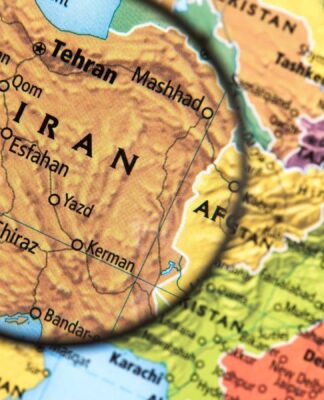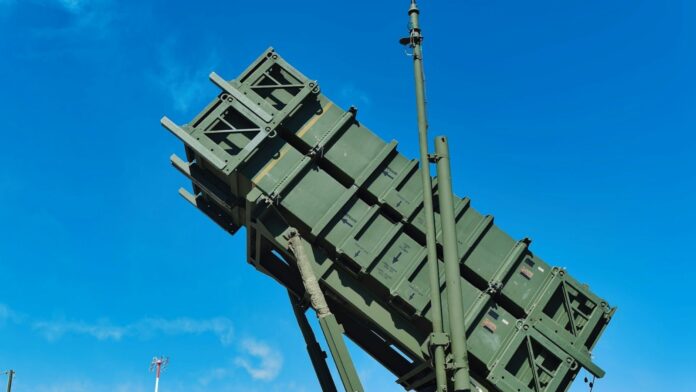

The existence of a CENTCOM strike plan for Iran is not surprising — military planners maintain contingency plans for every scenario. What makes Friday’s Axios report significant is the specific description: “short and powerful,” designed to “break stalled talks.” That framing describes a diplomatic tool, not a military objective.
What Axios Reported
Axios also reported that the U.S. Central Command had prepared a plan for a “short and powerful” wave of strikes on Iran in hopes of breaking stalled talks between Washington and Tehran.
“Short and powerful” as a diplomatic tool means: concentrated, precise, high-impact strikes on a limited set of targets, designed to demonstrate that the US can and will resume operations at any moment — without triggering the full-scale Iranian retaliation that a comprehensive bombing campaign would produce. It is the military equivalent of a warning shot, delivered by JDAM-tipped B-2 bombers.
The Assets In Place
About a dozen B-1B bombers arrived at bases in Europe. Five landed at the Fairford Royal Air Force base, UK, joining three B-52 bombers, while three others were redirected to Ramstein Air Base, Germany.
Fairford and Ramstein together give CENTCOM forward-deployed strategic bomber capability within striking range of Iran without requiring carrier-based aircraft. The B-1B, in particular, can carry a massive payload over long range and is capable of delivering the bunker-penetrating munitions needed to strike hardened underground sites like Fordow.
The US Army’s Dark Eagle hypersonic missile could be deployed to the Middle East for potential use against Iran.
Dark Eagle is the specific munition designed for Fordow — the uranium enrichment facility buried 80 metres underground, beneath a mountain, in a location that conventional bombs cannot reach. Its potential deployment to the region is the clearest signal that US military planners have not accepted Fordow’s survival as a permanent outcome of the war.
What Would Trigger the Plan
The “short and powerful” plan is a contingency, not a scheduled event. The triggers that would move it from planning to execution include: a complete breakdown of the diplomatic track with no further Iranian proposals; IRGC-initiated escalation in the Strait of Hormuz involving US casualties; or Trump deciding that the blockade’s economic pressure has reached its maximum effect without producing a sufficient Iranian offer.
Iran’s fourth proposal, delivered Friday and met by Trump’s “not satisfied,” keeps the diplomatic track technically alive — which keeps the strike plan in its folder rather than on the runway. But “not satisfied” is a much shorter distance from authorisation than “they’re making progress.”