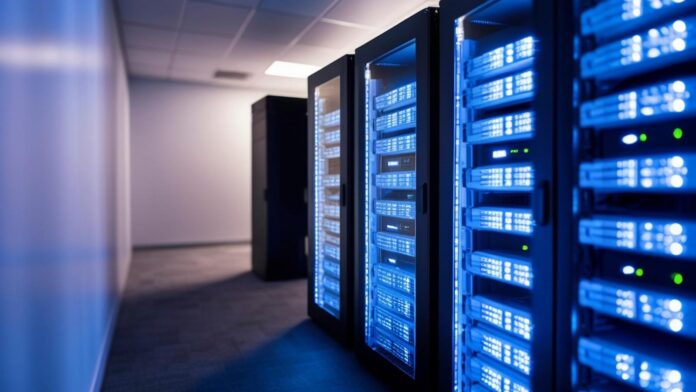

Artificial intelligence investment is accelerating worldwide as technology companies and governments race to build the infrastructure needed to support next-generation AI systems.
Over the past year, spending on AI computing power, data centers and semiconductor technology has surged, transforming the global technology industry.
Major technology firms are investing tens of billions of dollars into new facilities designed specifically to train and run advanced AI models.
The scale of investment highlights a growing consensus among policymakers and industry leaders: artificial intelligence is becoming one of the most strategically important technologies of the 21st century.
For the global economy, the AI boom is shaping everything from industrial productivity to geopolitical competition.
What Happened
Technology companies across the United States, Europe and Asia are dramatically expanding AI infrastructure.
The investment surge is being driven by several developments:
- rapid adoption of generative AI systems
- growing demand for computing power
- expansion of cloud infrastructure
- rising competition among technology firms
Companies including major cloud providers are building massive data centers capable of running thousands of high-performance AI chips.
These facilities provide the computing resources needed to train large artificial intelligence models that power tools used in business, research and everyday digital services.
Governments are also stepping in.
Several countries have launched national AI strategies that include funding for research institutions, semiconductor manufacturing and computing infrastructure.
The result is a global race to build the technological foundation of future AI systems.
Why Data Centers Are the New Strategic Infrastructure
Modern artificial intelligence systems require enormous computing power.
Training large AI models involves processing vast amounts of data using specialized semiconductor chips.
These chips are housed in large-scale data centers that operate continuously to perform complex calculations.
As a result, AI data centers are becoming a critical part of digital infrastructure.
They require:
- advanced semiconductor processors
- large amounts of electricity
- high-speed internet connectivity
- cooling systems to manage heat
Technology companies are increasingly investing in dedicated AI data centers designed specifically for these workloads.
Some of the newest facilities contain tens of thousands of graphics processing units (GPUs) optimized for AI computation.
Global Technology Competition Intensifies
The rapid expansion of AI investment is also reshaping geopolitical competition.
Countries around the world see artificial intelligence as a strategic technology with implications for:
- economic productivity
- military capability
- industrial innovation
- technological leadership
As a result, governments are introducing policies designed to strengthen their domestic AI ecosystems.
These include:
- research funding
- incentives for semiconductor manufacturing
- talent development programs
- partnerships between industry and universities
The goal is to ensure that national economies remain competitive in a technology landscape increasingly defined by artificial intelligence.
Economic Impact of the AI Boom
The surge in AI investment is already influencing several sectors of the global economy.
Technology companies are expanding hiring in areas such as:
- machine learning engineering
- data science
- semiconductor design
- cloud computing infrastructure
At the same time, businesses across multiple industries are beginning to integrate AI tools into their operations.
Examples include:
- automated data analysis in finance
- predictive maintenance in manufacturing
- AI-assisted medical diagnostics
- logistics optimization in transportation
These applications could significantly increase productivity in the coming years.
Some economists believe artificial intelligence could become one of the largest drivers of economic growth in the coming decade.
Energy and Infrastructure Challenges
The expansion of AI infrastructure also raises new challenges.
Large AI data centers consume significant amounts of electricity.
This has created concerns about:
- energy demand
- environmental impact
- infrastructure capacity
Technology companies are responding by investing in renewable energy sources and more efficient computing technologies.
Several firms have announced plans to power future data centers with solar, wind or nuclear energy.
The goal is to ensure that the rapid expansion of AI infrastructure remains sustainable.
Semiconductor Supply Chains
Another critical component of the AI boom is semiconductor production.
Advanced chips used in AI systems are among the most sophisticated components in modern electronics.
Manufacturing them requires:
- advanced fabrication facilities
- specialized materials
- highly skilled engineers
As demand for AI chips grows, semiconductor supply chains are becoming increasingly important.
Countries and companies are investing heavily to secure access to these technologies.
This dynamic has already influenced global trade policies and technology partnerships.
What Next
Experts expect AI investment to continue expanding rapidly over the next decade.
Several trends are likely to shape the next phase of development.
First, companies will continue building larger and more powerful data centers capable of supporting increasingly complex AI models.
Second, governments will likely introduce new regulatory frameworks designed to balance innovation with safety and transparency.
Third, competition between major technology powers could intensify as countries seek to secure leadership in artificial intelligence.
For now, one thing is clear: the global AI investment boom is only beginning.
The infrastructure being built today will shape the digital economy of tomorrow.