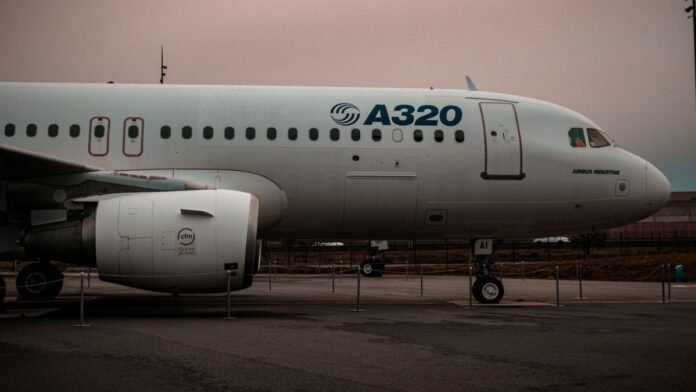

AIRBUS has issued an urgent recall affecting 6,000 A320-family aircraft worldwide, marking one of the largest safety actions in the company’s 55-year history. The move comes after engineers discovered that solar flares may corrupt critical data inside the aircraft’s Elevator Aileron Computer (ELAC), which controls key flight surfaces.
The company confirmed that airlines must complete immediate repairs to prevent potential flight control failures linked to intense space-weather events.
Incident Trigger: JetBlue Flight Hit by Sudden Pitch-Down Event
The recall was prompted by a serious inflight incident involving a JetBlue flight from Cancun to Newark on October 30. The aircraft reportedly experienced:
- An uncommanded pitch-down event
- Sudden altitude loss
- Multiple passenger injuries
The flight diverted to Tampa for an emergency landing, leading investigators to trace the malfunction back to corrupted ELAC data.
Solar Flares and Geomagnetic Storms Raise Aviation Risks
The safety alert follows weeks of extreme solar activity. On November 11, the sun released an X5.1 solar flare, the strongest of 2025, accompanied by three coronal mass ejections. This led to a severe G4 geomagnetic storm.
Scientists also recorded:
- Radio blackouts across Europe, Africa, and Asia
- A rare Ground Level Enhancement, where solar particles penetrate Earth’s magnetic shield
With the sun at solar maximum, experts warn that similar disruptions could become more frequent.
EASA Grounds Aircraft Until Repairs Are Completed
The European Union Aviation Safety Agency (EASA) issued an emergency directive, requiring all affected A320-family aircraft to remain grounded until repairs are carried out. Airlines including American, Lufthansa, and Avianca are now working urgently to comply during the busy holiday travel season.
Airbus Calls the Fix Simple, But Mandatory
According to Airbus engineers, the repair involves reverting to earlier flight-control software and replacing specific computer components. The fix itself is straightforward — but it must be completed before any grounded aircraft can return to service.