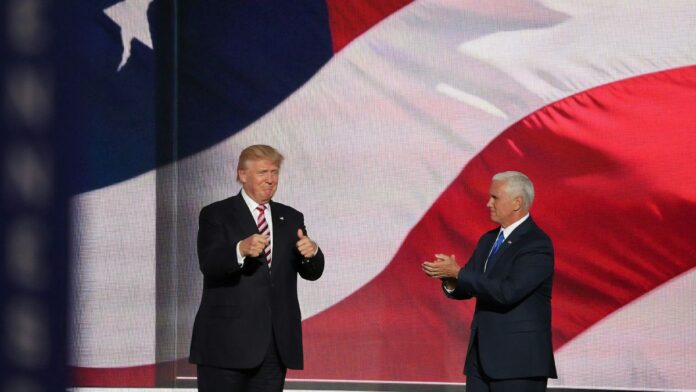

The United States is entering a period of heightened political uncertainty as a fresh wave of leadership changes within the federal government signals a broader restructuring effort at the highest levels of power.
Within the latest news cycle, President Donald Trump has already dismissed key officials and is now reportedly considering additional firings across major departments, including labor and commerce.
These developments come at a time of ongoing geopolitical tension and domestic policy challenges, amplifying concerns about governance stability and strategic direction.
The scale and timing of these changes suggest that this is not a routine reshuffle, but a deeper recalibration of executive leadership.
What Happened
In recent hours, multiple significant developments have emerged:
- The US Attorney General was removed from position
- An acting replacement has been appointed
- Additional cabinet-level changes are reportedly under consideration
- Senior military leadership changes have also been initiated
At the same time, restructuring within the Department of Defense has included early retirements and leadership adjustments, signaling that the changes extend beyond civilian departments.
These actions indicate a coordinated effort to reshape leadership across multiple branches of government.
Why It Matters
The implications of these developments extend far beyond personnel changes.
1. Governance Stability
Frequent leadership changes can:
- Disrupt policy continuity
- Delay decision-making processes
- Reduce institutional stability
2. Policy Direction
New appointees may bring:
- Different priorities
- Revised strategies
- Shifts in policy execution
3. Market and Global Confidence
Political stability is closely linked to:
- Investor confidence
- International relations
- Economic predictability
Context: A Government Under Pressure
The reshuffle comes amid multiple overlapping challenges:
- Ongoing geopolitical conflict
- Domestic policy disputes
- Economic uncertainty
At the same time, the administration has been managing a complex foreign policy environment, including military operations abroad and diplomatic tensions with allies and adversaries.
In a recent national address, President Trump emphasized progress in military objectives while downplaying economic risks—though markets reacted with volatility.
This broader context helps explain why leadership changes are occurring now.
A Pattern of Rapid Leadership Turnover
While leadership changes are not uncommon in any administration, the current pace and scope stand out.
Recent actions suggest:
- Increased reliance on acting officials
- Shorter tenures for key roles
- Greater centralization of decision-making
This pattern can create both flexibility and instability.
The Pentagon Factor
One of the most notable aspects of the current developments is the involvement of the Department of Defense.
Recent actions include:
- Early retirement of senior military officials
- Revisions to internal policies
- Expanded authority in certain operational areas
These changes suggest that the restructuring is not limited to political leadership but extends into the military hierarchy.
Implications for National Security
Leadership changes at the defense level can have significant consequences.
Operational Continuity
Changes in command can affect:
- Strategic planning
- Coordination across units
- Response readiness
Policy Execution
New leadership may:
- Adjust priorities
- Modify operational approaches
- Influence long-term strategy
Domestic Political Impact
Within the United States, the reshuffle is likely to influence political dynamics.
Congressional Response
Lawmakers may:
- Demand oversight
- Call for hearings
- Challenge appointments
Public Perception
Frequent changes can:
- Affect trust in institutions
- Influence public opinion
- Shape political narratives
Economic and Market Reaction
Political developments often have immediate economic implications.
Recent observations include:
- Increased market volatility
- Shifts in investor sentiment
- Movement in key sectors
Markets tend to respond not just to policy, but to uncertainty.
Expert Insight
Political analysts highlight several key risks:
1. Institutional Strain
Frequent changes can strain:
- Administrative processes
- Inter-agency coordination
- Policy implementation
2. Strategic Uncertainty
Unclear leadership direction can lead to:
- Delayed decisions
- Conflicting priorities
- Reduced effectiveness
3. Global Perception
International partners may view instability as:
- A risk factor
- A challenge to cooperation
- A signal of internal pressure
Global Implications
The United States plays a central role in global governance.
Leadership changes can affect:
- Diplomatic relations
- Military alliances
- Economic partnerships
In times of global tension, stability in US leadership is particularly significant.
What Happens Next
Several key developments are expected in the coming days:
1. Additional Announcements
Further changes in leadership positions may be confirmed.
2. Confirmation Processes
New appointees may require:
- Senate approval
- Vetting procedures
- Public scrutiny
3. Policy Signals
New leadership may begin to signal shifts in:
- Domestic policy
- Foreign policy
- Economic strategy
A Government in Transition
The current developments suggest that the US government is entering a transitional phase, marked by rapid changes in leadership and evolving policy direction.
Such transitions can create both opportunities and risks.
On one hand:
- New leadership can bring fresh perspectives
- Policy adjustments can address emerging challenges
On the other hand:
- Instability can disrupt operations
- Uncertainty can weaken confidence
Conclusion
The latest wave of leadership changes within the US government marks a significant moment in the current political landscape.
As the White House considers further firings and restructures key departments, the implications will be felt across governance, markets, and international relations.
The situation remains fluid, with the potential for additional developments in the near term.
For now, one thing is clear:
The United States is undergoing a period of rapid political transition—one that will shape its direction in the weeks and months ahead.