
Every major diplomatic attempt to resolve the US-Iran confrontation over the past two decades has eventually run aground on the same question: does Iran have the right to enrich uranium on its own soil? The answer has never been definitively resolved.
It was not resolved in the 2015 nuclear deal, which limited enrichment without eliminating it. It was not resolved before the war began. And it now sits at the centre of the Islamabad talks with the force of everything that has happened in the past 40 days bearing down on it.
What Iran Has
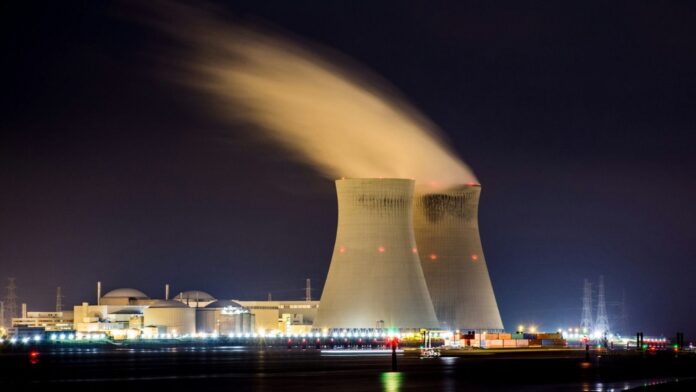
Iran’s nuclear program has been a focal point of international scrutiny for decades. Although the country suspended its formal nuclear weapons program in 2003, in December 2024 the UN nuclear watchdog IAEA reported enrichment to levels approaching weapons-grade. It also found an unprecedented stockpile of highly enriched uranium without a credible civilian purpose, giving Iran the capacity to produce enough fissile material for multiple nuclear weapons on short notice.
This is not a hypothetical threat. The stockpile exists, it has been documented, and it is the central asset Iran brings to the negotiating table in Islamabad — a source of leverage that no amount of military pressure has eliminated.
Iran’s Position
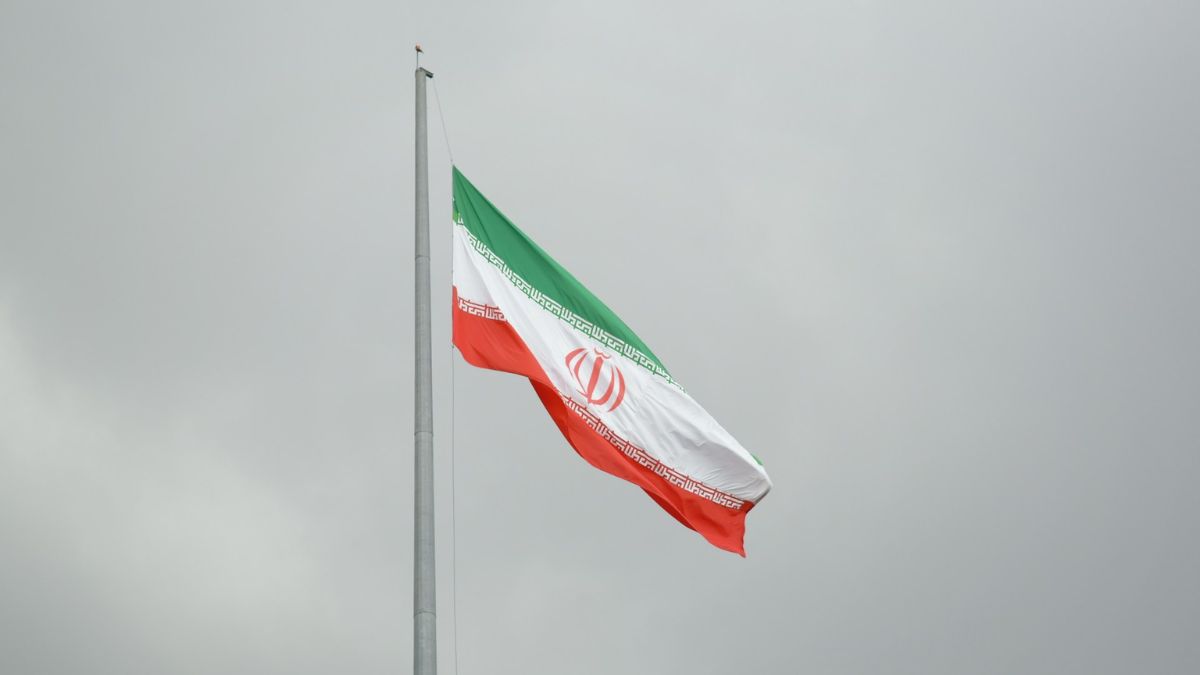
According to Iran’s 10-point proposal, Tehran’s conditions include recognition of its right to enrich uranium, the lifting of all sanctions, guarantees against future attacks, and an end to wars in the region.
Iranian Deputy Parliament Speaker Ali Nikzad said on state television that there would be no agreement if the 10 conditions were not accepted, and that the Supreme National Security Council had obtained permission from Supreme Leader Mojtaba Khamenei for those 10 conditions.
Iran’s argument for enrichment is grounded in international law. As a signatory to the Nuclear Non-Proliferation Treaty, Iran argues it has the sovereign right to develop nuclear technology for peaceful civilian purposes — including enrichment for power generation and medical isotopes.
Tehran has maintained consistently, and the IAEA has partially confirmed, that it does not currently possess a nuclear weapon and has not made the political decision to build one.
While Iran says it is not seeking nuclear weapons, it insists on enriching its own uranium as a national right. Domestic uranium enrichment has been a major sticking point in all previous talks between Tehran and Washington.
The US Position
The White House has set a firm condition ahead of negotiations: Tehran must end uranium enrichment inside its territory as a non-negotiable red line in any future agreement. “The President’s red lines, namely the end of Iranian enrichment in Iran, have not changed,” White House Press Secretary Karoline Leavitt said. She stressed the administration would not accept any deal that allows Iran to continue enrichment activities.
Three specific minimum requirements have been articulated from the Israeli side of the equation, which aligns with the US position: the removal of 60 percent enriched uranium from Iran, the dilution of 20 percent enriched material to a low level, and the suspension of uranium enrichment for as many years as possible.
Trump himself has stated this plainly: “There will be no enrichment of uranium.” He said the United States would, working with Iran, “dig up and remove all of the deeply buried nuclear dust” — a reference to the results of strikes on Iran’s nuclear facilities during the June 2025 conflict.
Why This Gap Is So Hard to Bridge
The fundamental difficulty is not technical — it is political. Iranian leaders, across the full spectrum of the country’s political factions, view the right to enrich uranium as a matter of national sovereignty and scientific achievement. Surrendering it would be politically toxic domestically, regardless of what economic or security guarantees the US might offer in return.
Any future US-Iran nuclear agreement would require Senate approval to be durable, Republican Senators Lindsey Graham and Tom Cotton warned, and such approval would only be possible if Iran fully dismantled its enrichment capabilities and addressed its missile and terrorism activities — conditions even further from what Iran has put on the table.
At the same time, the Trump administration’s domestic position is equally constrained. Accepting any Iranian enrichment — even at low levels, even under intrusive inspections — would expose the White House to accusations of having gone to war and achieved less than what the JCPOA, the 2015 nuclear deal, had already delivered.
The Potential Opening
Despite the gap, there is at least one signal of possible movement. The White House noted that Iran had indicated to the US that it would be willing to turn over its stock of enriched uranium. Leavitt confirmed this at a press briefing, saying: “We were given indications that they will turn over the enriched uranium.”
If accurate, this would represent a significant concession — separating the question of Iran’s future enrichment rights from the immediate question of what to do with the existing stockpile. A deal that removes the most dangerous material from Iranian soil, while leaving the broader enrichment question for future negotiation, could give both sides enough to claim progress without requiring either to fully capitulate.
A version of this arrangement appeared in earlier pre-war negotiations: Iran would permanently halt high-level uranium enrichment, restore IAEA inspections, and commit to implementing the Additional Protocol allowing surprise inspections at undeclared sites — in exchange for the US lifting further sanctions and persuading European partners not to trigger the snapback of UN sanctions.
What History Tells Us
Every previous attempt to resolve this dispute through diplomacy has failed. The JCPOA, reached in 2015 after years of negotiations, limited Iranian enrichment to 3.67 percent purity and restricted the stockpile to 300 kilograms — but did not eliminate enrichment. When Trump withdrew from the JCPOA in 2018, Iran gradually escalated its enrichment program, eventually reaching near-weapons-grade levels.
The war that has just paused was launched in part because those negotiations again failed. On the eve of the strikes on February 28, Oman — the mediator — said a deal was “within reach.” It wasn’t.
Iran’s Supreme Leader Mojtaba Khamenei’s advisor described Trump’s desired control over the Iranian nuclear program as a “fantasy.” Republican senators warn any deal without full enrichment dismantlement would not survive Senate ratification.
What Happens in Islamabad
Ghalibaf’s pre-talks statement suggests Iran will arrive in Islamabad insisting that recognition of its enrichment right is a prerequisite for any agreement, not a negotiable item within one. The US will arrive insisting the opposite. The mediators — Pakistan, Egypt, and Turkey — will be working to find a formula that allows both sides to step back from that binary without losing face.
Whether such a formula exists, and whether it can be found in two weeks, is the question that will define the outcome of this war.