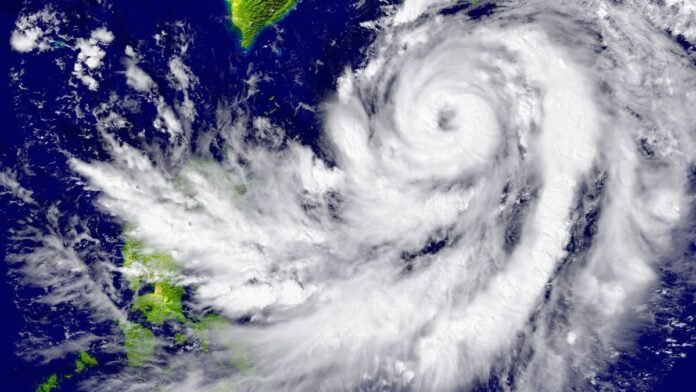

At least 40 people have died after Typhoon Kalmaegi swept through the central Philippines, bringing torrential rains, destructive winds, and severe flooding, disaster response officials confirmed on Tuesday. The storm trapped dozens of residents on rooftops and submerged entire neighborhoods as it barreled across the country.
The Office of Civil Defense said most fatalities were reported from Cebu province and other central islands. “At least 26 people were reported killed — many in flooding — while details of other deaths are still being verified,” said Bernardo Rafaelito Alejandro IV, deputy administrator of the agency.
Helicopter Crash During Relief Mission
In a separate tragedy, a Philippine Air Force Super Huey helicopter carrying relief supplies crashed in Agusan del Sur province during a humanitarian flight to assist areas hit by Kalmaegi. The Eastern Mindanao Command (EastMinCom) confirmed that all six crew members were killed in the crash.
“EastMinCom appeals for the public’s understanding, prayers, and cooperation as efforts to locate the crew continue. Further updates will be provided once additional information becomes available,” the command said in a statement.
The helicopter had taken off from Davao City as part of a four-aircraft formation bound for Butuan to carry out a Rapid Damage Assessment and Needs Analysis (RDANA) mission. Communication was lost mid-flight, triggering a large-scale search and rescue operation.
Local residents later reported seeing burned wreckage and bodies near Loreto town, though the military has not yet confirmed these accounts.
Storm’s Path and Intensity
As of Tuesday afternoon, Typhoon Kalmaegi was last spotted over the coastal waters of Jordan town in Guimaras province with sustained winds of 130 kph (81 mph) and gusts reaching 180 kph (112 mph). The weather bureau forecast the typhoon to move into the South China Sea by early Wednesday after lashing the western province of Palawan.
Authorities said 387,000 residents were evacuated before landfall amid warnings of storm surges up to three meters and destructive winds. Over 3,500 passengers and cargo truck drivers were stranded in nearly 100 seaports, while 186 domestic flights were canceled due to rough weather.
Communities Struggle Amid Power Outages and Flooding
In Southern Leyte, an elderly man drowned as floodwaters rose, while a resident in Bohol province died after being hit by a fallen tree. Gwendolyn Pang, secretary-general of the Philippine Red Cross, said many were stranded on rooftops awaiting rescue.
“We have received so many calls from people asking us to rescue them from roofs and from their houses, but it’s impossible,” Pang told The Associated Press. “There are so many debris, you see cars floating so we have to wait for the flood to subside.”
Eastern Samar and Cebu Among Hardest Hit
In Eastern Samar, about 300 rural homes were damaged or destroyed by fierce winds on Homonhon Island, according to Mayor Annaliza Gonzales Kwan of Guiuan town.
“There was no flooding at all, but just strong wind,” Kwan said. “We’re OK. We’ll make this through. We’ve been through a lot, and bigger than this.”
Meanwhile, Cebu province—still recovering from a 6.9 magnitude earthquake in late September that killed 79—was among the hardest hit by flooding. Cars were swept away, roads became impassable, and widespread blackouts left thousands without power.
Country Faces Another Deadly Typhoon Season
The Philippines faces around 20 tropical storms and typhoons each year, making it one of the most disaster-prone nations in the world. Officials warned that the full extent of Typhoon Kalmaegi’s impact may take days to assess as rescue and recovery operations continue across the devastated central regions.