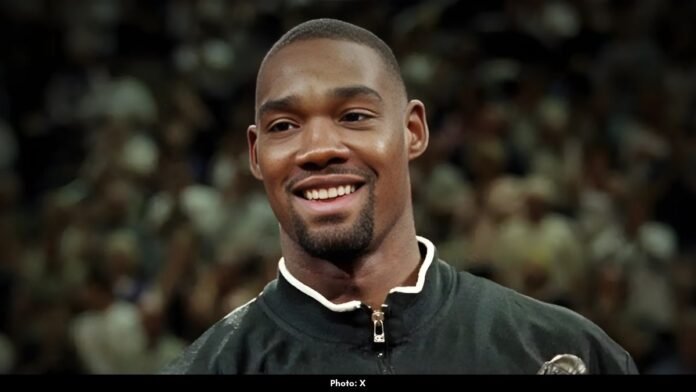

Former Wake Forest basketball star Rodney Rogers has died at age 54 following complications from pneumonia. The university and family confirmed the news, honoring him as one of the most influential players in program history.
Rogers is survived by his wife, Faye, and three children — all of whom followed his path by building their own basketball careers.
A Dominant Force in College Basketball
Rise of the ‘Durham Bull’
Known as the “Durham Bull” for his power and intensity, Rodney Rogers made an immediate impact when he arrived at Wake Forest in 1991. He won ACC Freshman of the Year, helped end the program’s seven-year NCAA Tournament drought, and quickly became one of the conference’s most feared players.
Record-Breaking Achievements
Rogers later earned First Team All-ACC honors and, in 1993, captured both ACC Player of the Year and First Team All-American honors while leading Wake Forest to the Sweet 16. He remains the only Wake Forest player to win both ACC Freshman of the Year and ACC Player of the Year.
His success helped lay the foundation for the program’s strongest era, paving the way for future stars—including the Tim Duncan era—and contributing to seven straight NCAA Tournament appearances.
From College Star to NBA Standout
Rogers was selected ninth overall in the 1993 NBA Draft, the highest Wake Forest draft pick in more than 30 years. Over his 12-year NBA career, he averaged 11 points per game and earned widespread respect for his toughness and steady play.
His standout performance earned him the NBA Sixth Man of the Year award, and he retired in 2005 after a long, consistent professional career.
Life-Changing Accident and Inspiring Legacy
In 2008, Rogers was paralyzed from the shoulders down in an accident. Despite the life-altering injuries, he devoted himself to supporting others through the Rodney Rogers Foundation, which provided help and encouragement to individuals with spinal cord injuries.
Wake Forest University honored him with the 2022 Distinguished Alumni Award and an honorary Doctor of Humane Letters degree. His No. 54 jersey remains proudly displayed in the rafters of the university’s home arena—a permanent reminder of his impact.