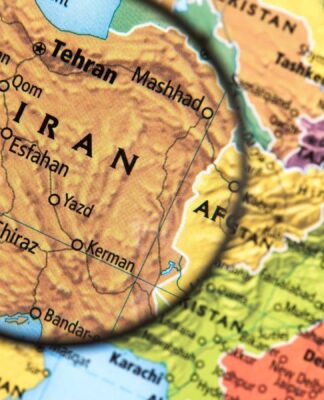

The United States military has confirmed that one of the most expansive naval actions since the Gulf War begins Monday morning. US Central Command announced Sunday that it will begin implementing a blockade of all maritime traffic entering and exiting Iranian ports at 10 AM Eastern Time — a direct escalation following the collapse of 21 hours of peace talks in Islamabad that ended without any agreement.
The move transforms the Strait of Hormuz standoff from a diplomatic crisis into an active military confrontation, with the US Navy enforcing control over the same waterway Iran has used to blockade global energy supply since late February.
The CENTCOM Announcement
“US Central Command forces will begin implementing a blockade of all maritime traffic entering and exiting Iranian ports on April 13 at 10 AM ET, in accordance with the President’s proclamation,” CENTCOM stated in an official release late Sunday. “The blockade will be enforced impartially against vessels of all nations entering or departing Iranian ports and coastal areas, including all Iranian ports on the Arabian Gulf and Gulf of Oman,” the statement continued, adding that CENTCOM forces “will not impede freedom of navigation for vessels transiting the Strait of Hormuz to and from non-Iranian ports.”
Commercial mariners were advised to monitor advisory broadcasts and contact US authorities for guidance. The Department of Justice said it will “vigorously prosecute anyone who buys or sells sanctioned Iranian oil,” according to Acting Attorney General Todd Blanche.
Trump said the US blockade would become effective “pretty soon” with help from NATO, and described the plan as a “complete blockade” that does not include exceptions for allies. He told Fox News that the Islamabad negotiations amounted to a “good meeting” despite producing no agreement.
Iran’s Response
Iran’s Revolutionary Guard said the Strait of Hormuz remained under Iran’s “full control” after Trump’s blockade announcement. In a statement, the Guard said the strait was open for non-military vessels, but military ones would receive a “forceful response.” It also said any military vessels attempting to approach the strait would be seen as violating the ceasefire agreement.
Iran’s paramilitary Islamic Revolutionary Guard Corps said that “contrary to the false claims of some enemy officials, the Strait of Hormuz is under smart control and management, and remains open for the safe passage of non-military vessels in accordance with specific regulations.”
What the Blockade Actually Covers
The CENTCOM statement makes a distinction that matters: the US is blockading Iranian ports specifically, not the Strait of Hormuz as a whole. Vessels transiting Hormuz to and from non-Iranian ports will not be impeded. But any ship entering or leaving Iran’s own ports — including the ports through which Iran exports nearly 2 million barrels of oil per day — will be stopped.
Trump’s plan to blockade the Strait of Hormuz would halt the nearly 2 million barrels a day of Iranian oil that has been passing through the waterway, further squeezing global supply and cutting off a vital lifeline for the Islamic Republic. On Sunday, ship transits remained at greatly reduced levels in the face of Tehran’s stranglehold on the world’s most important energy chokepoint, with most vessel owners reluctant to operate in an area that until recently was a war zone.
Why This Changes Everything
The Iranian blockade of Hormuz was enforced through threat, mines, and attacks on vessels. A US Navy blockade of Iranian ports is enforced by warships — a fundamentally different level of commitment and risk.
If any Iranian vessel attempts to challenge the blockade, or if Iran makes good on its threat to use “severe force” against US military ships approaching Hormuz, the ceasefire — already strained almost to breaking point — will be over. That would return the region to active combat, with the US Navy now directly involved in the world’s most critical energy chokepoint.
Iran has confirmed it retains control of the Strait and has warned that any military vessel approaching will be treated as a ceasefire violation subject to immediate retaliation.
Omani Foreign Minister Badr Albusaidi joined other global leaders calling for the ceasefire to be extended and for talks to continue. “Success may require everyone to make painful concessions, but this is nothing as compared to the pain of failure and war,” he said.
The blockade begins in hours. The ceasefire — which was already fraying — now faces its most serious test. And the global energy markets that briefly exhaled last week are bracing for the next move.