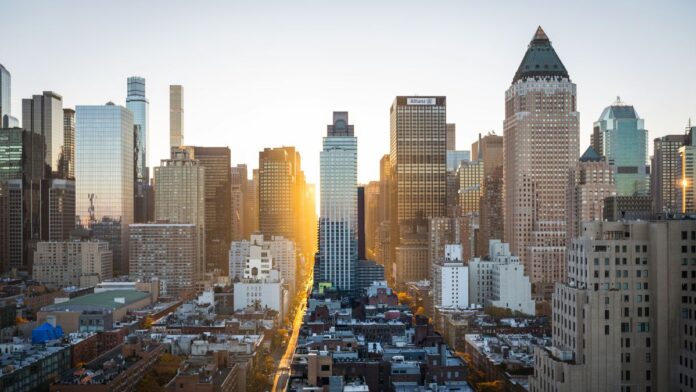

New York City is facing a growing environmental challenge as scientists confirm the city is gradually sinking—not metaphorically, but physically. The pressure from 1.68 trillion pounds of buildings is pushing the city downward into layers of soil, sand, and artificial fill never designed to support such massive, long-term weight.
NYC’s Annual Drop: 1–2 Millimeters on Average
According to recent studies, New York is sinking at an average rate of 1–2 millimeters per year. However, several neighborhoods are sinking much faster. Areas like Lower Manhattan, Brooklyn, and Queens, especially those built on reclaimed land rather than solid bedrock, are experiencing accelerated subsidence.
Towers anchored deep into Manhattan schist remain stable. But older homes and brownstones built on former wetlands face more significant risks.
It’s Not Just the Weight—NYC’s Geology Is Still Shifting
Scientists emphasize that the city’s weight isn’t the only factor. New York is also sinking because it is:
- Old and overbuilt
- Resting on geologically unstable ground
- Affected by groundwater changes
- Still adjusting from the last ice age
This combination creates a slow but steady downward shift.
A Dangerous Mix: Land Sinking While Seas Are Rising
The real threat emerges when subsidence meets rising sea levels. As researchers explain, the city faces a serious double impact:
A megacity pressing downward while the ocean pushes upward.
With climate change accelerating global sea-level rise, New York’s sinking ground makes coastal neighborhoods even more vulnerable to flooding and storm surges.
The Next Big Infrastructure Battle
Experts warn that New York’s next major infrastructure challenge won’t focus on housing or subways. Instead, the city will confront a multibillion-dollar race to:
- Reinforce shorelines
- Elevate vulnerable neighborhoods
- Re-engineer infrastructure
- Protect communities from incoming tides
Without swift, large-scale action, the risks to coastal regions will only increase.
The City That Never Sleeps Is Slowly Slipping
As scientists continue monitoring the city’s subsidence patterns, one message is clear:
New York City must adapt or face escalating climate threats.
The city that never sleeps is, slowly but surely, slipping downward.