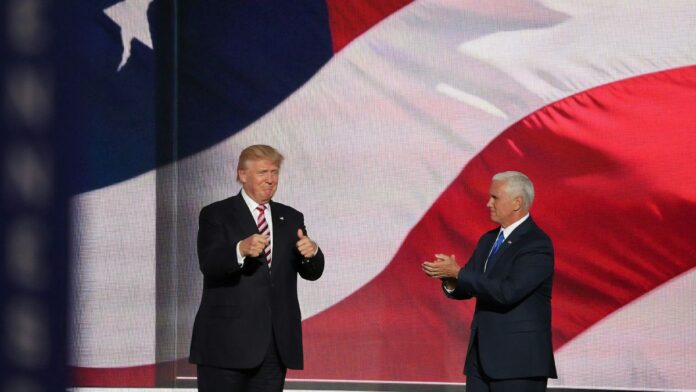

President Donald Trump has signed an executive order aimed at restricting the burning of the American flag, despite repeated Supreme Court rulings that classify it as protected symbolic speech under the First Amendment.
The order does not criminalize flag burning by itself. Instead, it directs Attorney General Pam Bondi to prioritize cases where flag burning is linked to other crimes such as violence, property damage, illegal discrimination, or violations of fire and safety regulations.
While signing the order, Trump declared: “If you burn a flag, you get one year in jail, no early exits, no nothing.”
The order further emphasizes the government’s responsibility to “restore respect and sanctity to the American Flag” by prosecuting individuals who commit additional crimes while burning it.
DOJ to Prioritize Flag Burning-Related Crimes
Under the executive order, the Justice Department and other federal agencies are instructed to refer incidents of flag burning that violate local or state laws—such as open burning bans—to local authorities.
Attorney General Bondi is also directed to “vigorously prosecute” cases connected to flag desecration and, if necessary, challenge the scope of the First Amendment in federal court.
Supreme Court’s Longstanding Rulings
The Supreme Court has consistently ruled that burning the American flag is a form of symbolic speech protected by the First Amendment:
- In 1989, the Court struck down state laws banning flag desecration.
- In 1990, it invalidated a federal law attempting to criminalize the act.
Even conservative Justice Antonin Scalia, who personally opposed flag burning, once said:
“We have a First Amendment, which says that the right of free speech shall not be abridged.”
Justice William Brennan, writing in the 1989 decision, reinforced that:
“The government may not prohibit the expression of an idea simply because society finds the idea itself offensive or disagreeable.”
Expert Reactions
Critics argue Trump’s order cannot override constitutional protections. Bob Corn-Revere, chief counsel at the Foundation for Individual Rights and Expression (FIRE), said:
“President Trump may believe he has the power to revise the First Amendment with the stroke of a pen, but he doesn’t.”
He emphasized that free speech includes the right to express opinions—even those deemed offensive.
Trump’s Long-Standing Push for Flag Burning Penalties
Trump has long advocated harsher punishments for flag burning. In 2024, after protesters in Washington DC burned a flag during Israeli Prime Minister Benjamin Netanyahu’s speech, Trump again demanded prison terms for offenders.
Earlier this year at Fort Bragg, Trump repeated his call for a one-year prison sentence. Soon after, Senator Josh Hawley introduced legislation to increase penalties for flag burning during federal crimes.