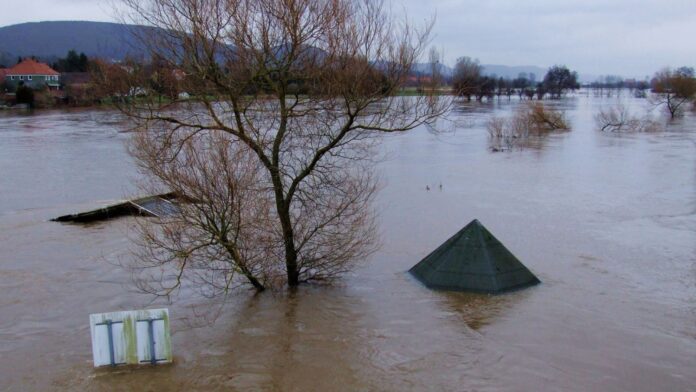

NASA has deployed two specialized aircraft to support flood recovery efforts in Kerrville, Texas, providing crucial data to aid state and local authorities in assessing damage and responding to emergencies.
Coordination with Emergency Agencies
These aircraft are part of NASA’s Disasters Response Coordination System, activated to assist in emergency operations following the recent flooding. They are collaborating with the Texas Division of Emergency Management, Federal Emergency Management Agency (FEMA), and humanitarian organizations like Save the Children and GiveDirectly.
Tackling Persistent Cloud Cover
“Persistent cloud cover has made it difficult to obtain clear satellite imagery, so the Disasters Program coordinated with NASA’s Airborne Science Program at NASA’s Johnson Space Flight Center in Houston to conduct a series of flights to gather observations of the impacted regions,” the US space agency stated.
Data Sharing for Effective Response
NASA is sharing this vital data directly with emergency response teams to enhance search and rescue efforts and support decision-making as well as resource allocation.
Advanced Aerial Surveys
Fitted with the advanced DyNAMITE sensor, NASA’s high-altitude WB-57 aircraft began aerial surveys of flood-hit areas on July 8 after departing from Ellington Field.
The sensor captures high-resolution imagery of the Guadalupe River and surrounding regions, providing critical insights that help assess damage and coordinate recovery efforts. This system allows for real-time data collection and analysis, improving situational awareness and accelerating emergency response.
Mapping Flood Extent with UAVSAR
In addition, NASA’s Uninhabited Aerial Vehicle Synthetic Aperture Radar (UAVSAR) is conducting flights from the agency’s Armstrong Flight Research Center in Edwards, California, aboard a Gulfstream III.
Operated by the Jet Propulsion Laboratory in Southern California, the UAVSAR team is set to collect data over the Guadalupe, San Gabriel, and Colorado river basins between Wednesday and Friday.
Detecting Hidden Water
This advanced system can penetrate vegetation to detect water that optical sensors might miss, helping to map the extent of flooding and evaluate damage in affected communities.
“Flights are being coordinated with FEMA, the Texas Division of Emergency Management, and local responders to ensure data is quickly delivered to those making decisions on the ground. Imagery collected will be sent to NASA’s Disaster Response Coordination System,” concluded the statement.